Duct repair and replacement in Bloomfield, NJ

One room that never gets warm is rarely a thermostat problem. It is usually a duct that has come off, been crushed, or been leaking into a crawlspace for years.

5.0from 38 Google reviews20 towns · open 7:00 AM–9:00 PM

A flexible duct crushed almost flat where it crosses a timber joist in a crawlspace

The short answer

Duct repair is the work that cleaning cannot do: reconnecting a branch that has pulled off its takeoff, replacing a flexible run crushed where it crosses a joist, sealing joints that are leaking conditioned air into a crawlspace, and replacing insulation jackets that have torn open. It matters because a duct system that leaks is heating and cooling parts of the house nobody lives in. A branch that has come adrift entirely will leave one room cold all winter while the thermostat insists everything is fine. In older Bloomfield housing, where forced air was retrofitted into a structure built for something else, these faults are common — the runs were threaded through whatever route the joists allowed, supported with whatever was to hand, and in many cases have not been looked at since. The first step is always somebody physically following the run.

The room that never warms up

This is the complaint that brings most people to this page, and it usually has a physical cause at the far end of a duct. A flexible branch pushed onto a sheet metal takeoff and secured with nothing but a strap will, over years of expansion and vibration, work its way off — and once it is off, the system is heating the joist bay very effectively. Nothing at the register tells you this; the fan runs, a little air arrives, the thermostat in the hall is satisfied, and one bedroom is six degrees colder than the rest of the house every winter. Finding it means following the run rather than measuring at the grille, and the fix is normally a proper mechanical fastening and a mastic seal rather than a new duct.

  • The register still blows a little, which is why it goes undiagnosed
  • The thermostat is satisfied elsewhere and reports no problem
  • Following the run physically is the only way to find it
A flexible duct pinched flat over a joist with the insulation jacket torn

Tape does not fix a crushed duct, because the fault is the shape of it. It comes back in the same place within a year or two.

Crushed, kinked, and past taping

Flexible duct is easy to install and easy to install badly. Pulled tight round a corner it kinks; run over a joist without a support it pinches flat; left slack between hangers it sags into a series of traps that slow the air and collect dust. None of those are repairable with tape, because the problem is the shape of the duct rather than a hole in it. What actually works is replacing the affected length with duct cut to the right length, supported at proper intervals, and routed so it is not fighting a joist. In a retrofitted system that sometimes means changing the route rather than replacing in place, and it is worth doing once properly — a crushed run that gets taped comes back in the same spot within a year or two.

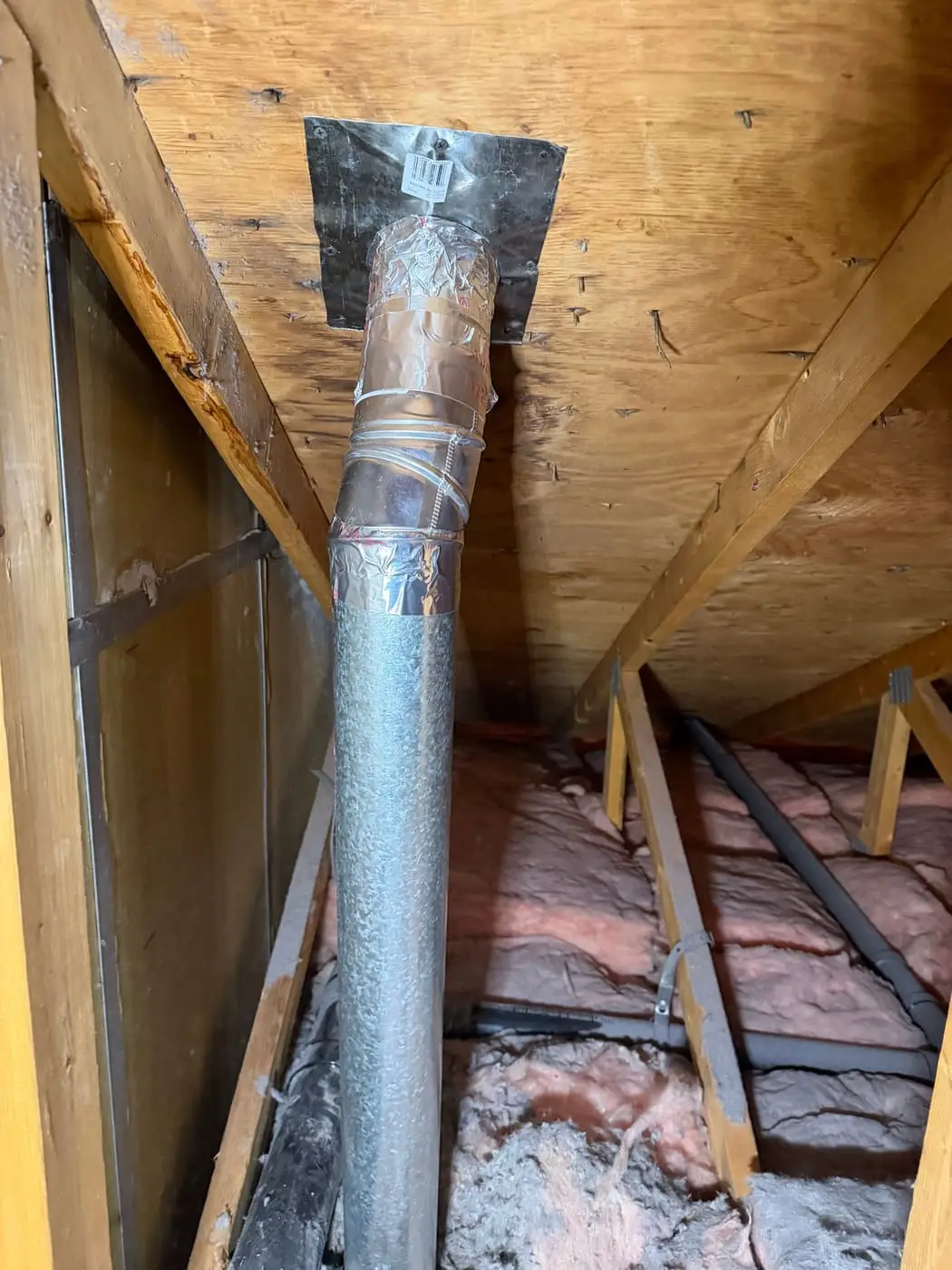
A newly fitted insulated flexible duct clamped and taped to a sheet metal takeoff

Leaks, and where your heating is actually going

Duct leakage is invisible, undramatic and expensive. Joints that were never sealed, or were sealed with cloth duct tape that has since dried out and let go, leak conditioned air continuously into crawlspaces, joist bays and basements. The system compensates by running longer, so the symptom is a heating bill rather than a cold room, which is why it goes unaddressed for years. Sealing is unglamorous work — mastic on every accessible joint, mechanical fasteners where the connection carries load, and the insulation jacket closed properly afterwards — and it is usually the highest-value thing that can be done to an older retrofitted system. It also makes the difference between a duct clean being worthwhile and being pointless.

  • Cloth duct tape dries out and lets go — mastic does not
  • The symptom is a bill, not a cold room, so it goes unnoticed
  • Sealing before cleaning, or the cleaning achieves less than it should

When replacement is genuinely the answer

Most systems want repair rather than replacement, and we will say so. The cases where replacing a run is genuinely right are specific: flexible duct that has gone brittle and splits when it is handled, ductwork that has been through a flood and cannot be brought back, runs so badly routed that repairing them in place means repairing them again, and any duct with nesting material or rodent contamination inside it that cannot be fully removed. Outside those, a system that is cleaned, sealed and properly supported behaves like a much newer one. We would rather do that and be called back for the chimney in the autumn than sell a replacement the house did not need.

On the job

What this looks like in practice

  • A flex duct pinched almost shut over a joist in a crawlspace

    This is the room that never warms up, seen from underneath

  • A new insulated flex run clamped to a takeoff with an even tape line

    Cut to length, supported, and sealed rather than wrapped

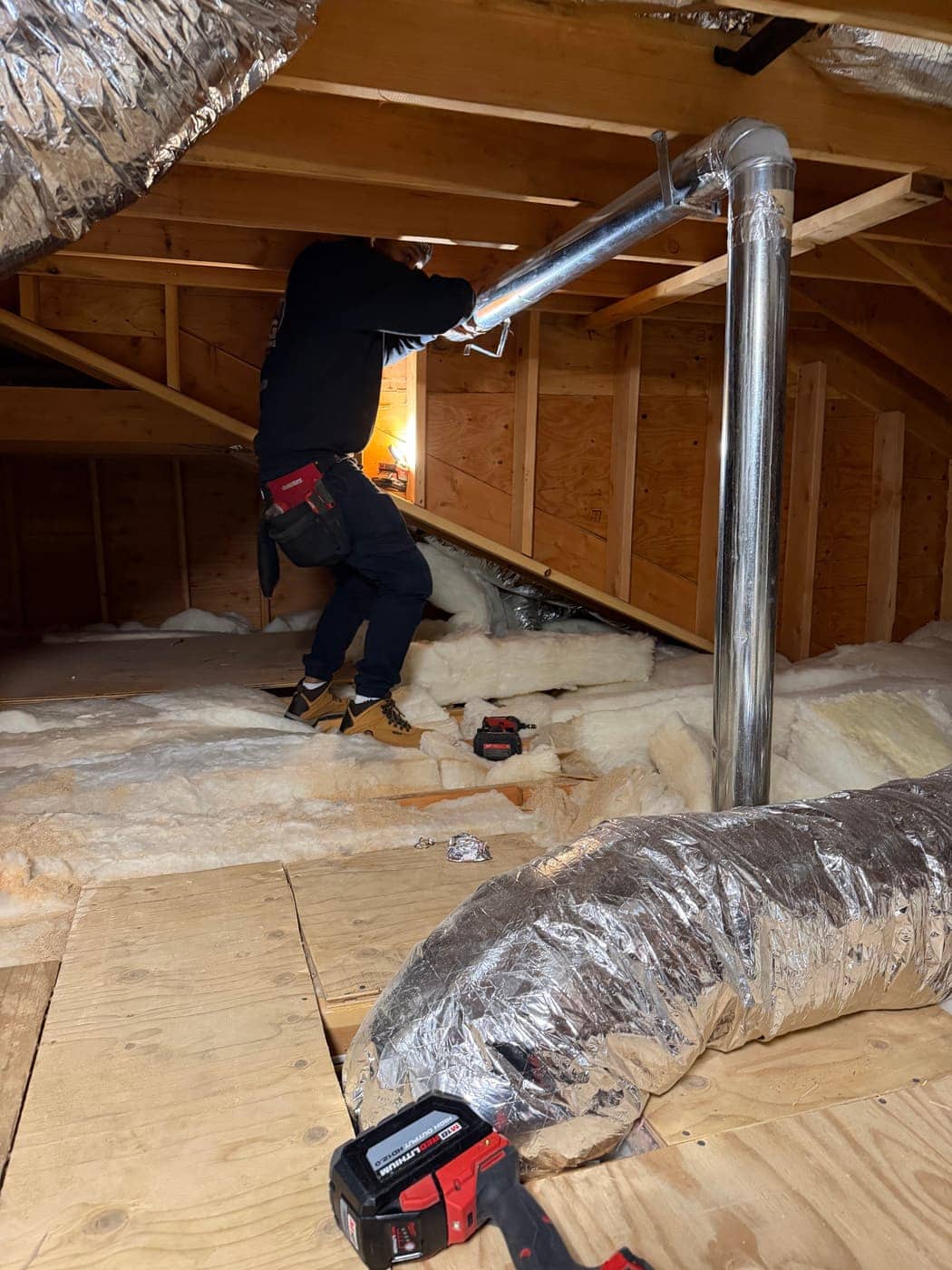
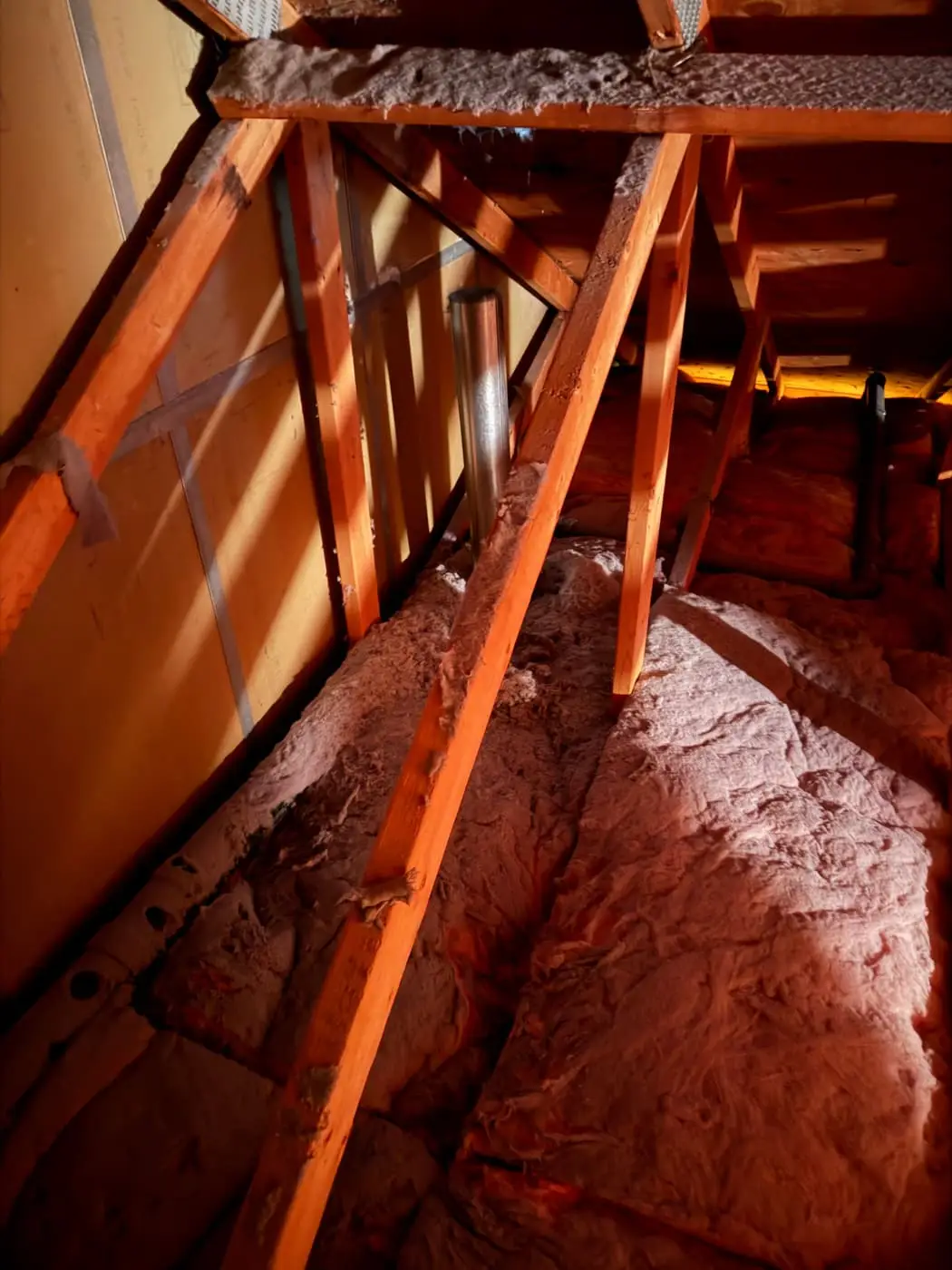
  • Duct and riser in an insulated attic space

    Retrofitted runs go where the joists allowed

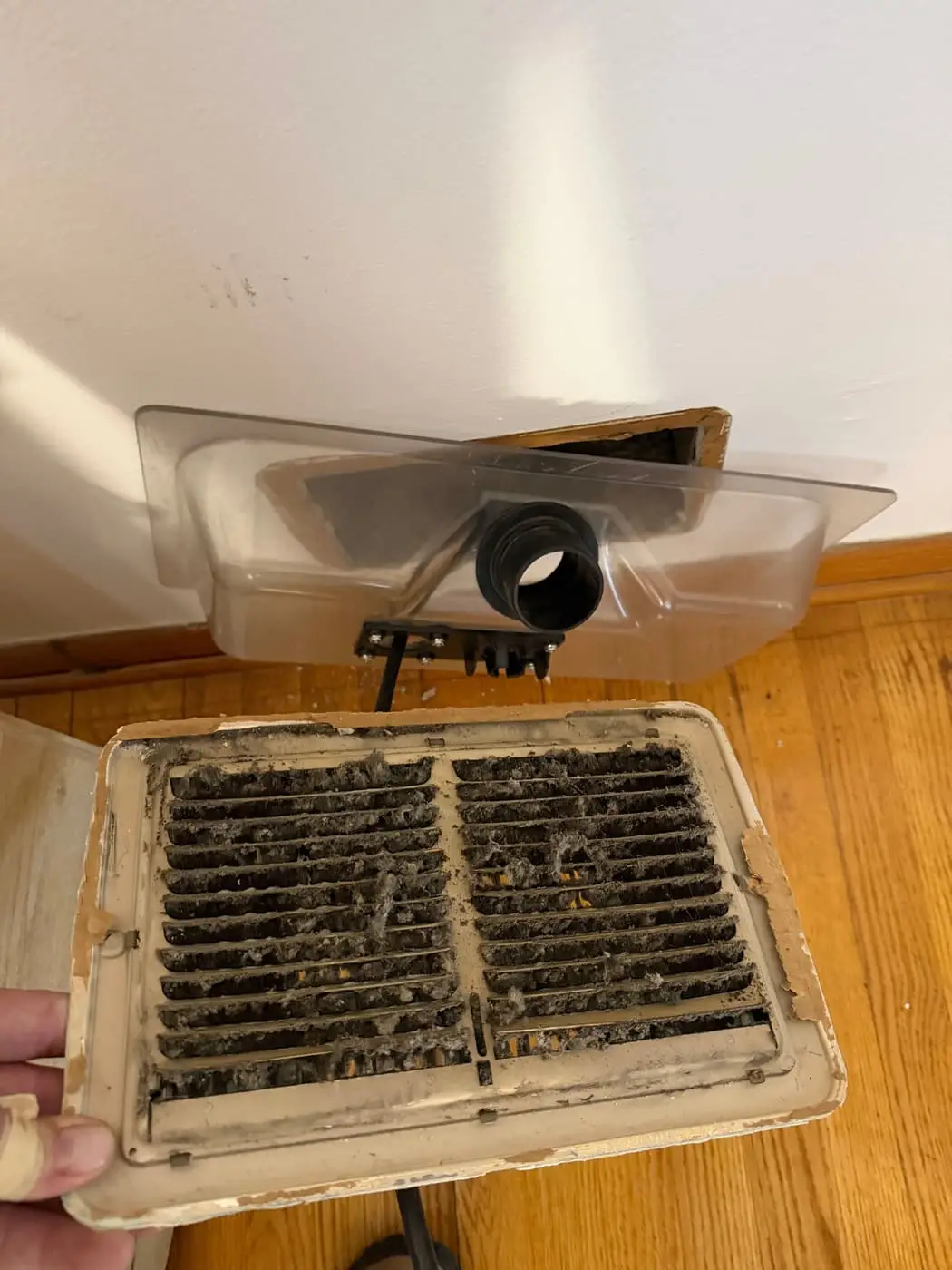
  • The inside of a galvanised trunk duct

    Sealing first — otherwise cleaning achieves less than it should

What Bloomfield homeowners say

5.0

38 reviews on Google

Read on

  • 5 stars38
  • 4 stars0
  • 3 stars0
  • 2 stars0
  • 1 stars0

Matthew Jones

Honest good working local company. The amount they quoted me on the phone was the price I paid after the service was completed.

Megan Gough

Expert setup, high-powered vacuums, and absolutely no dust residue. Excellent work.

Lucille Jensen

Water had been leaking around the chimney flashing, but the repair solved it completely. The crew sealed and reinforced the affected area with precision. Rain is no longer a concern. The workmanship looks strong and durable.

Read all 38 reviews on Google

Questions about duct repair and replacement

One bedroom is always cold. Is that the ducts?

Very often, and the usual cause is a branch that has come off its takeoff inside a joist bay or a crawlspace. The register still blows a little, so nobody suspects it, and the system spends every winter heating the space between two floors. Somebody has to follow the run to find it.

Can crushed flexible duct just be taped?

No. The fault is the shape rather than a hole, so tape restores nothing. The affected length gets replaced, cut to the right length, and supported so it does not pinch again in the same spot.

Is duct sealing worth doing on an older house?

Usually it is the single highest-value thing that can be done to a retrofitted system. Leaking joints send conditioned air into crawlspaces continuously, and because the symptom is a bill rather than a cold room it tends to go unaddressed for years.

Should the ducts be sealed before they are cleaned?

Where both are needed, yes — sealing first means the cleaning is not immediately undone by a system pulling dust in through open joints. If we find significant leakage during a cleaning visit we will tell you, rather than finishing the clean and saying nothing.

Do you replace whole duct systems?

We repair, reroute and replace runs. A full system replacement is usually a job for the HVAC contractor who will also be sizing the equipment, and where that is genuinely what your house needs we will say so plainly rather than selling you half of it.