Fireplace and stove service in Bloomfield, NJ

A pilot that will not hold, a stove door that has stopped sealing, a room that smells of last night's fire — these are appliance problems, and they are usually cheaper than the chimney problem people assume they have.

5.0from 38 Google reviews20 towns · open 7:00 AM–9:00 PM

A technician checking a living-room firebox by torchlight with the vacuum ready

The short answer

Fireplace and stove service is the work on the appliance itself rather than on the chimney above it: the pilot assembly and thermocouple on a gas insert, the gaskets and glass on a wood stove, the throat damper on an open masonry fireplace, and the draught problems that make a room smell of smoke when nothing is even lit. Most of what people call a chimney problem starts here. A pilot that will not stay lit is usually a dirty or failing thermocouple rather than anything wrong with the flue. A stove that will not hold overnight is usually a perished door gasket. A fireplace that pushes smoke back into the room on a cold still evening is usually a house that has been made airtight around it. We work on gas and on wood, across thirty-eight towns in eleven New Jersey counties, and the first thing that happens is that somebody watches the appliance actually run.

Gas inserts — the pilot is usually the whole story

A gas insert that lights and then dies within a minute is almost always telling you about its thermocouple. That is the little probe standing in the pilot flame, and its entire job is to produce the faint current that keeps the gas valve persuaded. Soot it, corrode it, or simply wear it out and the valve stops believing and closes. Cleaning the assembly and checking the flame is actually wrapping the probe fixes a good proportion of them, and replacing the probe fixes most of the rest. What matters is looking at how the flame sits, because a pilot that is technically alight but drifting off the probe produces exactly the same symptom and gets misdiagnosed as a valve — which is a different job and a considerably larger one.

  • Lights, then dies within a minute — think thermocouple before valve
  • The flame has to wrap the probe, not merely exist near it
  • Ceramic logs put back in the arrangement the manufacturer specified, not the one that looks nice
The pilot assembly of a gas fireplace insert with burner hood, thermocouple and a small blue flame

Most of what gets called a chimney problem is an appliance problem. It is worth finding out which one you have before anybody goes on the roof.

The damper, and why yours is stuck

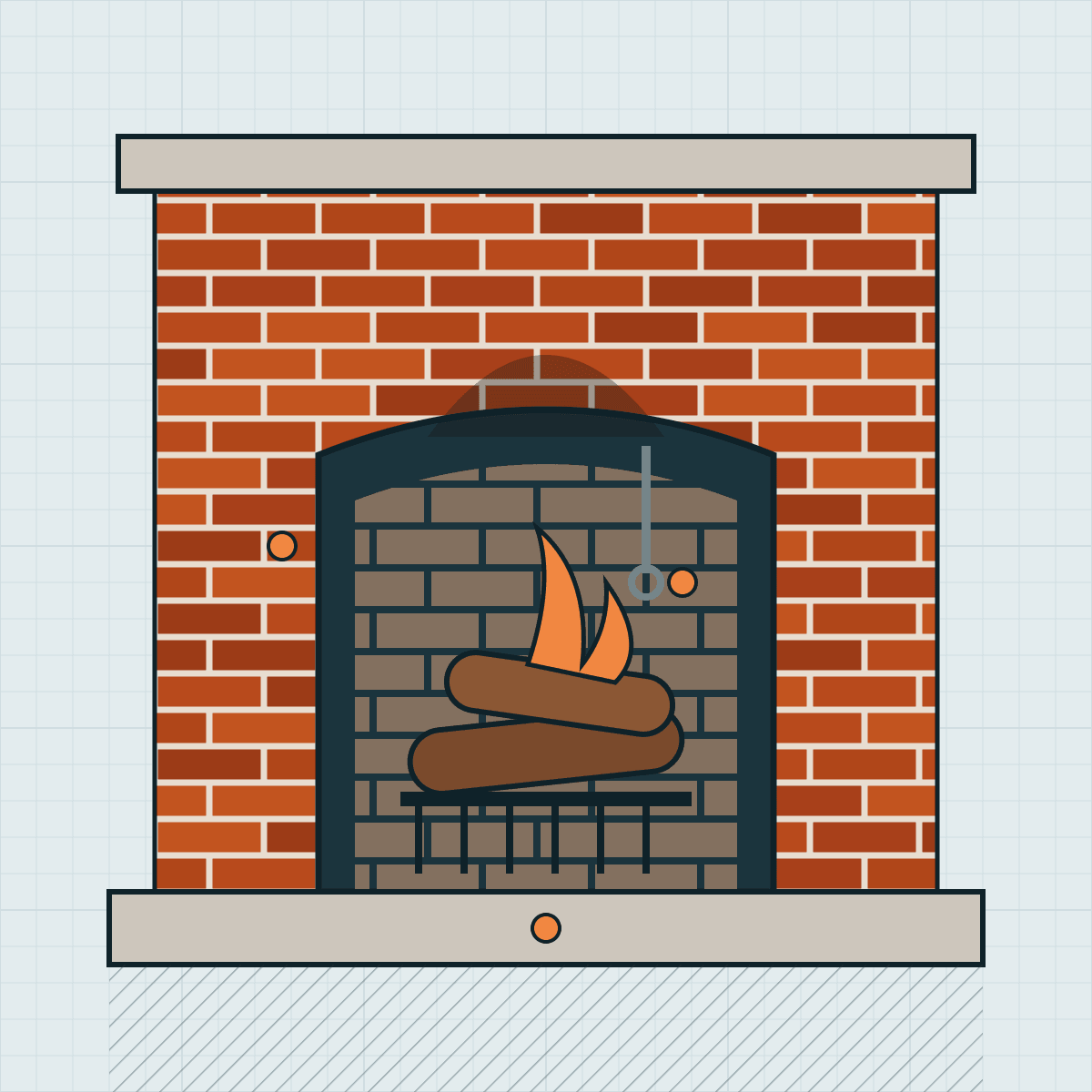
On an open masonry fireplace the throat damper is a cast iron plate sitting just above the firebox, and its job is to shut the flue when there is no fire so the heating you are paying for does not go up the chimney. In a pre-war Bloomfield house it has typically spent decades in soot, been painted over at least once, and been operated by a handle that somebody bent. Freeing it is often straightforward. What is not straightforward is the damper that has corroded through, which is common where a chimney has been taking water at the crown for years — and that is a case where the damper is the symptom and the crown is the job. A damper that cannot close is also the reason a great many houses smell faintly of old fire in summer.

A cast iron throat damper seen from inside the firebox, open on its frame

Wood stoves — gaskets, glass and burning too cool

A wood stove that will not hold a fire overnight, burns through wood too quickly, or blackens its glass within an evening is usually failing to seal rather than failing to draw. The door gasket perishes gradually, so nobody notices the day it stops working; air leaks in around the door, the fire runs faster and hotter than the control setting suggests, and the stove becomes impossible to damp down. The glass tells the same story from the other direction: air wash systems keep the glass clear only when the stove is running at the temperature it was designed for, so persistent blackening often means the stove is being run too cool — which is also the fastest way to build creosote in the flue above it.

  • A door that will not hold a note of paper is a door that is not sealing
  • Glass blackening within an evening usually means the stove is running too cool
  • Running too cool is also what glazes the flue above it

Smoke coming back into the room, and the airtight house

Downdraught gets blamed on the chimney and is very often about the house. A fireplace needs air to replace what it is sending up the flue, and an older Bloomfield house that has since been given new windows, insulation and a sealed-up basement no longer supplies it freely. Run a kitchen extractor or a bathroom fan at the same time and the house will happily take that make-up air back down the chimney, bringing the smoke with it. The diagnosis is usually quick — light the fire, then start switching things on — and the fix is often about providing air rather than about touching the chimney at all. Where the flue genuinely is the problem it is normally height, an oversized coal-era flue, or a cap that has been fitted too tight.

On the job

What this looks like in practice

  • A close view of a gas insert pilot assembly with ceramic logs behind

    The pilot has to wrap the probe, and that is a thing you look at

  • A cast iron throat damper open above a firebox with the smoke shelf behind

    A damper that closes is heating you are not sending up the flue

  • A technician checking a firebox by torchlight in a living room

    The appliance gets run and watched before anything is dismantled

  • A swept and clean firebox ready for the season

    Left in a state you can light the same evening

What Bloomfield homeowners say

5.0

38 reviews on Google

Read on

  • 5 stars38
  • 4 stars0
  • 3 stars0
  • 2 stars0
  • 1 stars0

Matthew Jones

Honest good working local company. The amount they quoted me on the phone was the price I paid after the service was completed.

Megan Gough

Expert setup, high-powered vacuums, and absolutely no dust residue. Excellent work.

Lucille Jensen

Water had been leaking around the chimney flashing, but the repair solved it completely. The crew sealed and reinforced the affected area with precision. Rain is no longer a concern. The workmanship looks strong and durable.

Read all 38 reviews on Google

Questions about fireplace and stove service

My gas fireplace lights and then goes out after a minute. What is that?

Nine times out of ten it is the thermocouple — the probe in the pilot flame that holds the gas valve open. Sooted, corroded or simply worn out, it stops producing enough current and the valve closes. It is one of the cheaper faults on a gas insert and it gets misdiagnosed as a failed valve surprisingly often.

Can you service a gas fireplace and the chimney in one visit?

Yes, and it is usually the sensible way to do it — one trip, one set of coverings, and both reports at the same time. The gas insert still vents through a flue that corrodes even though it never fills with creosote, so the two jobs belong together more than they look like they do.

Why does my house smell of smoke when there is no fire?

Usually a damper that no longer closes, sometimes combined with the house pulling air down the chimney. In summer, warm damp air coming down a flue lined with old soot is what produces that particular smell. Freeing or replacing the damper deals with most of it; a top-sealing cap deals with the rest.

My wood stove burns through wood far too quickly.

Look at the door before you look at the flue. A perished gasket lets air in around the door, so the stove runs hotter and faster than the air control suggests and cannot be damped down. It is a small part and it changes how the stove behaves completely.

Do you work on pellet stoves?

Yes. They are a different animal — a mechanical feed, a combustion blower and a much narrower vent — and they want servicing more often than a wood stove rather than less. Tell us the make when you call so the right parts are on the van.