
Chimney sweeping in Bloomfield, NJ, starting with a look inside
A sweep removes the soot and creosote a season of fires leaves on the inside of the flue. We look down it with a camera first, so the cleaning is based on what is actually there, and you see it on the screen with us.
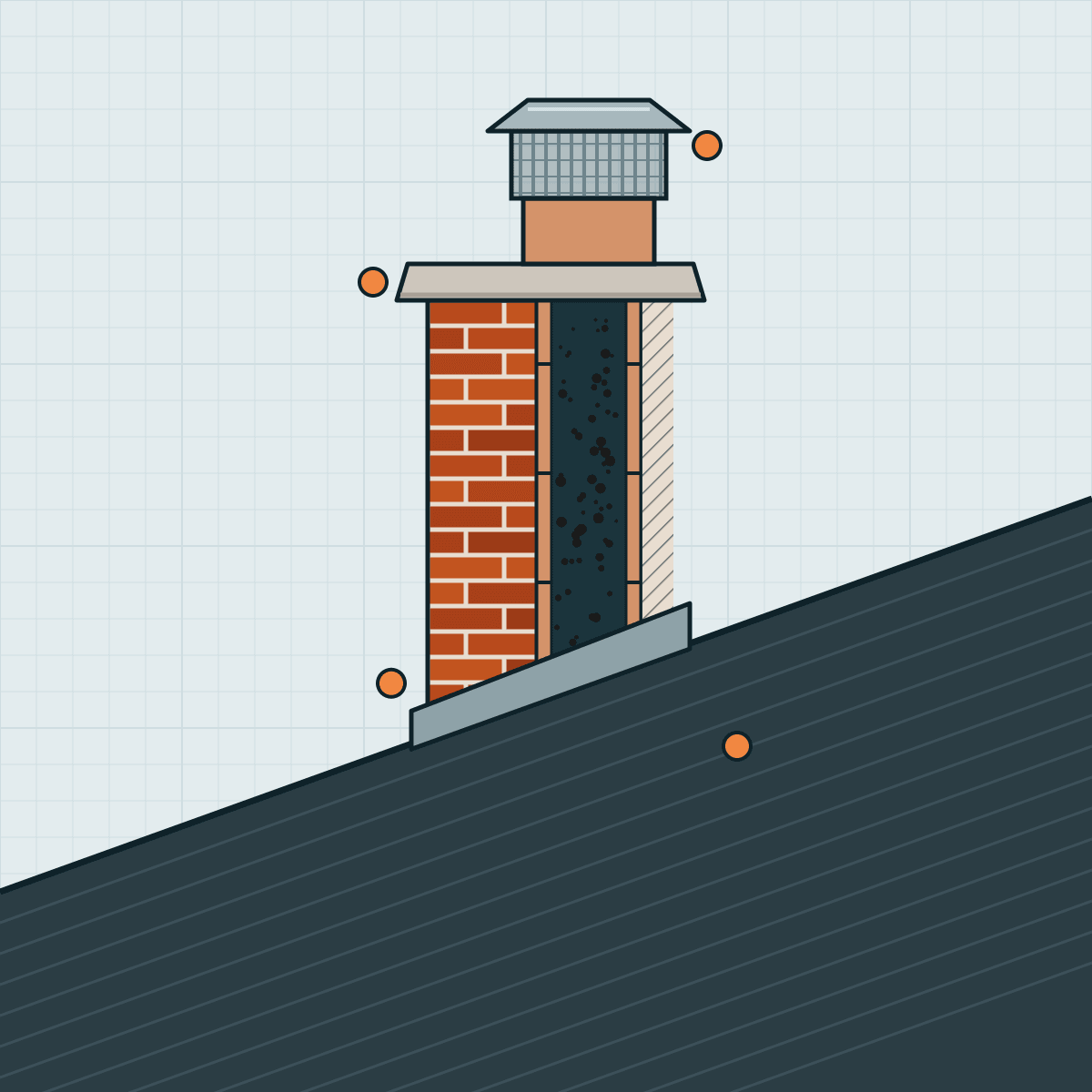
What a sweep is
Sweeping clears the deposits that build up inside a flue: dry soot, hardened creosote, and the debris that falls in from the top. NFPA 211 asks for an inspection once a year and a cleaning whenever the deposit calls for one, and how often that is depends on what you burn and how you burn it.
The camera goes in first
A brush cannot tell us whether a flue is cracked, too wide for the appliance on it, or blocked by a nest halfway up. The camera can. We run it the length of the flue before we clean, turn the screen toward you, and talk through what is on the walls. In an older house, the camera often finds things a brush would never fix, such as an open joint between liner tiles or a flue far larger than the boiler venting into it. When that happens, you hear about it before any cleaning starts.
- How much soot or creosote is on the walls
- Whether the damper opens and seals
- Cracks or open joints in the liner
- Nests, fallen tile or other blockages
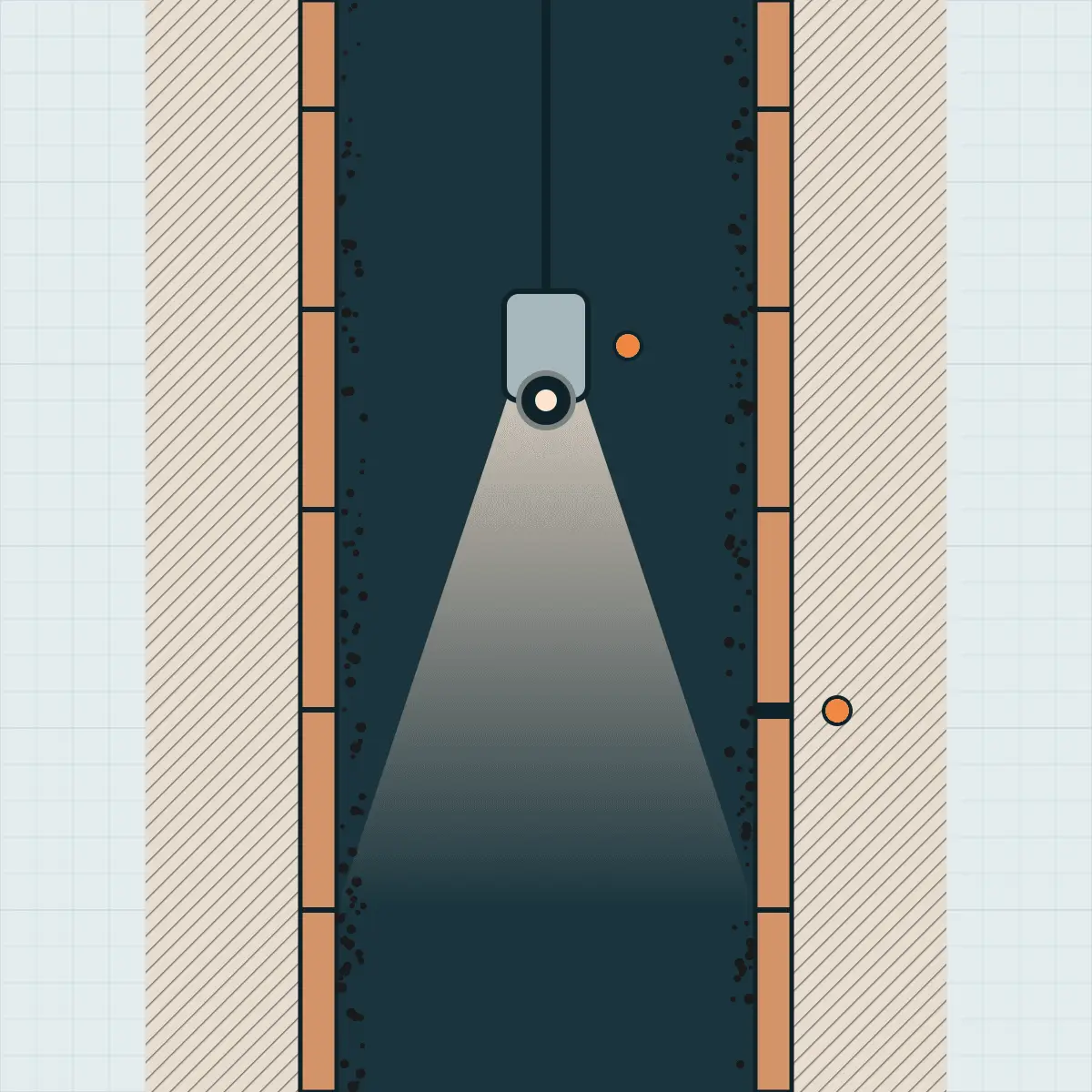
We only clean a flue after we have looked inside it.
Keeping the soot out of your living room
The worry we hear most is the mess, so the order of work is fixed. Coverings go down over the hearth and floor first. The vacuum is switched on before the damper opens and runs until we leave. Rods go up from below, so what comes loose falls into the firebox and into the vacuum. Where the roof is safe to stand on, we also work the flue from the top, which reaches the upper section a rod from below can miss. Before we go, the hearth is cleaned out and photographed.
Wood, oil and gas flues
Different fuels leave different deposits. Wood leaves creosote, which can be flaky, hard or glazed depending on how cool the smoke runs. Oil leaves soot and scale that narrow the flue and can clog the base. Gas leaves very little deposit, but its cooler, wetter exhaust can wear on an old masonry flue from the inside. In Bloomfield and the towns around it, many houses have a fireplace flue and a boiler flue side by side in one chimney, and we check both.
- Wood fireplaces, inserts and stoves
- Oil boiler and furnace flues
- Gas appliance flues, checked for blockage and draft
- Shared chimneys in two to four family houses
When a new boiler or water heater goes in
In New Jersey, replacing a fuel-fired furnace, boiler or water heater comes with a chimney verification form, UCC F370, filed with the town's construction office. Someone has to check that the flue suits the new appliance, and a homeowner cannot sign it in place of that check. If you are replacing equipment, a sweep and camera inspection before the installer arrives saves a second trip.
Reviews from our Google listing
A selection of our 5-star reviews on Google.
A hundred years of lime mortar requires a careful, low-RPM touch, and that antique sensibility was obvious in the preservation-grade sweeping of our 1910 hearth.
Soot was cleaned from the flue lining with non-abrasive polymer heads, leaving the critical structural integrity of the ceramic glaze undamaged.
Before any damage to the fundamental integrity of the ceiling, we were able to fix the outside chimney leaks after identifying significant water damage behind the lead counter-flashing.
Questions about chimney sweeping
How often should a chimney be swept?
NFPA 211 calls for an inspection at least once a year, and a sweep whenever the inspection finds enough deposit to need one. A fireplace used through a whole winter usually needs a yearly sweep, and a stove burned daily can need more.
Will there be soot in the house afterwards?
It should not be. Coverings go down first, the vacuum runs for the whole visit, and the rods work from below so loose deposit falls into the firebox and the vacuum.
Do I see what the camera finds?
Yes. The screen faces you while we look, and you get photographs of anything worth noting, whether or not it needs work.
What happens if you find damage?
We show it to you, explain what it means and what fixing it involves, and give you a written estimate. Nothing extra is done on the spot without your go-ahead.
Do you sweep boiler and furnace flues too?
Yes. Oil flues especially need regular cleaning, and gas flues need a yearly look for blockages and liner damage.