
Dryer vent cleaning in Bloomfield, NJ, from the dryer to the wall
If a load that used to dry in one cycle now needs two, the duct behind the dryer is usually holding lint. We clear the whole run, from the transition hose to the hood on the outside wall, and check that air moves freely again.
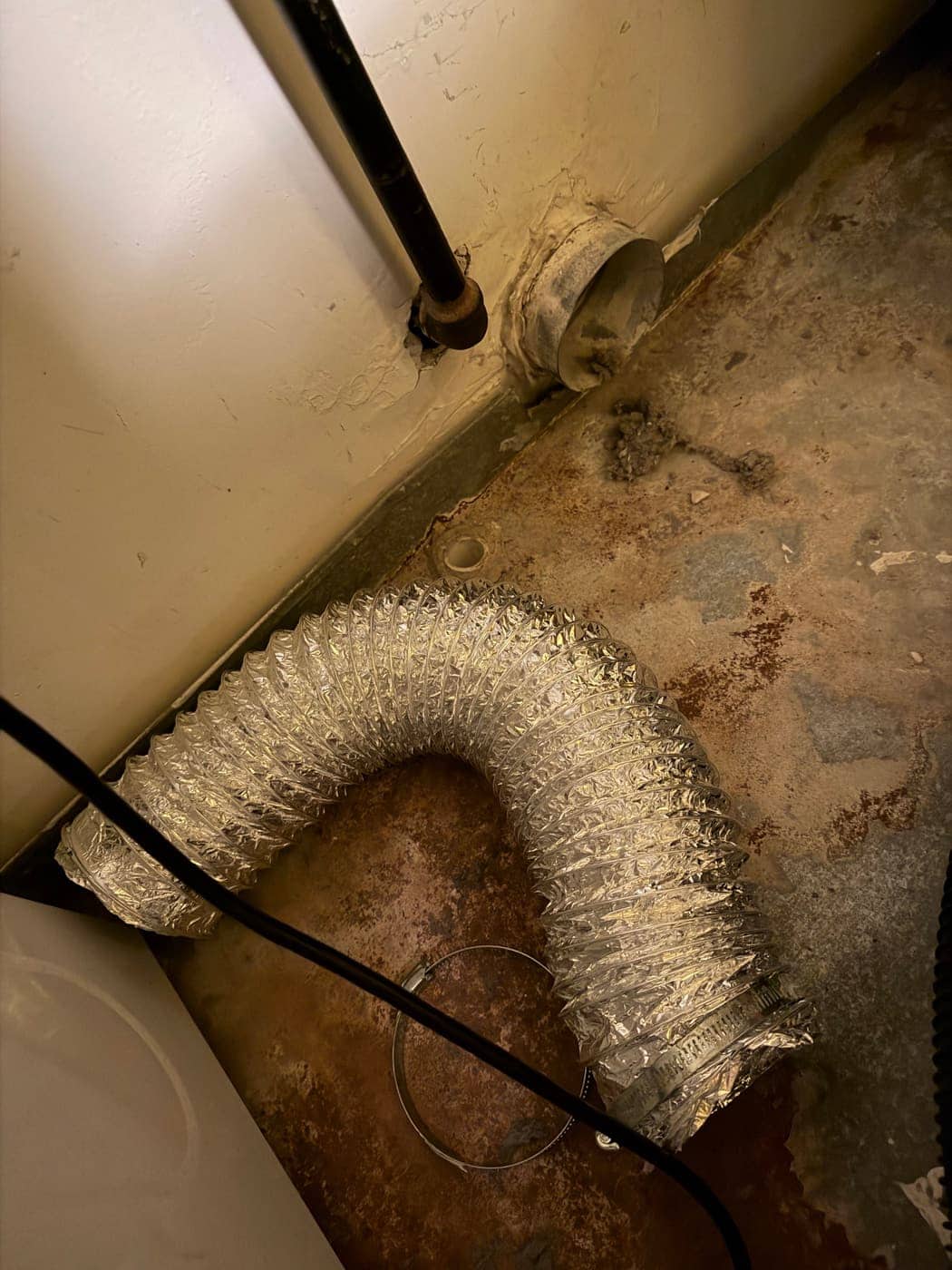
What the job is
Dryer vent cleaning removes the lint that gets past the screen and settles in the duct between the dryer and the outside. It is a different job from cleaning the dryer itself, and it matters because a clogged vent makes the dryer run longer and hotter.
Lint the screen does not catch
The lint screen catches most of the lint, but some always gets through. It settles wherever the duct bends, rises or sags, and over time the opening gets smaller. The first sign is usually a longer drying time. Next come a hot dryer top, a humid laundry room or a hood flap that barely opens when the dryer runs. A burning smell means the run is badly blocked and the dryer should not be used until it is cleared.
- Clothes taking longer to dry
- A hot dryer cabinet or a damp laundry room
- A hood flap that hardly moves while the dryer runs
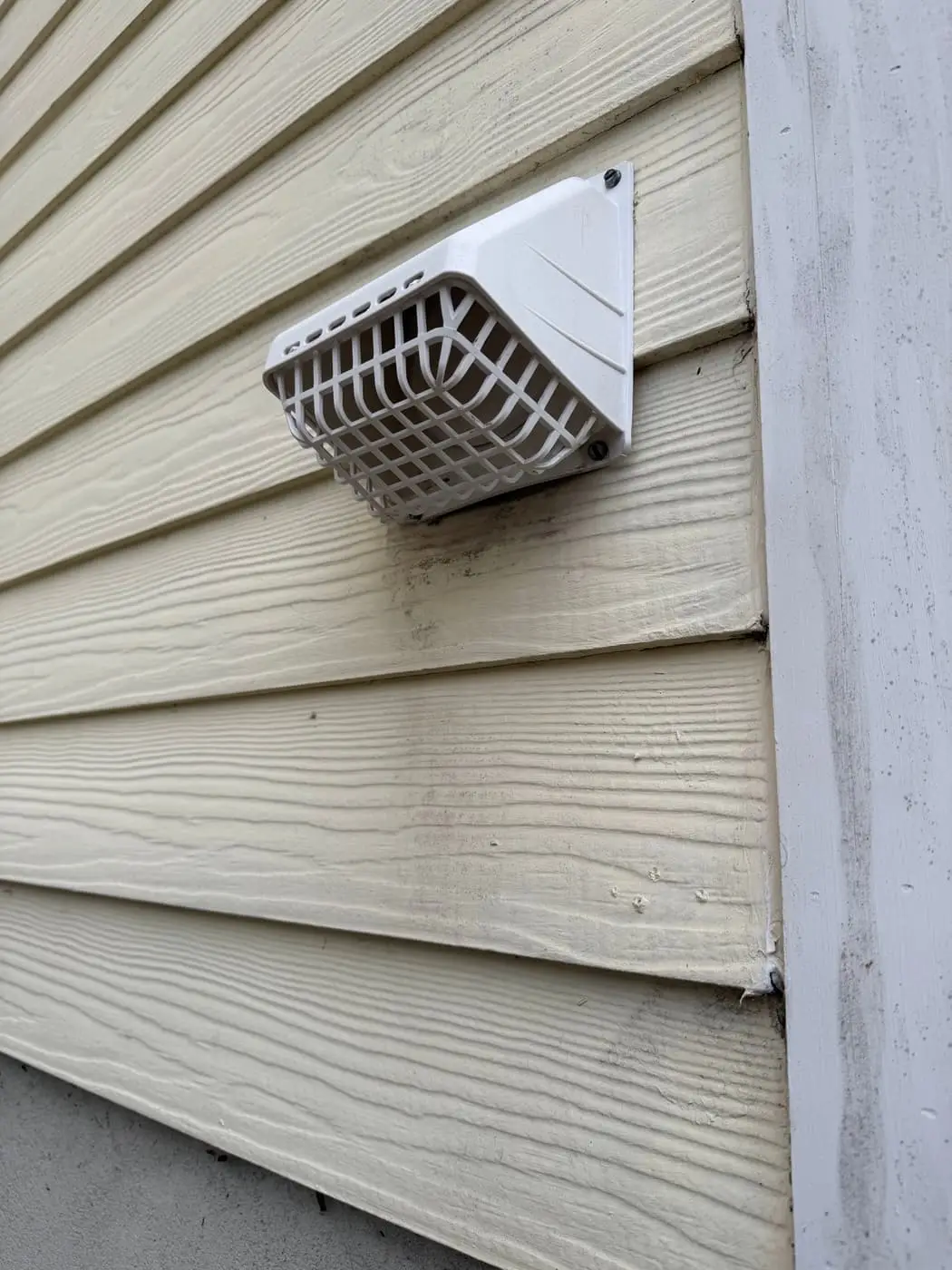
Pushing a brush through a vent without suction just moves the lint further down the line.
Working the run from both ends
We pull the dryer away from the wall, disconnect the transition hose and work the duct with a rotary brush while a vacuum draws the lint out. Then we go to the outside hood and clear it from that end too. Working from both ends gets the lint out of the duct instead of packing it into the next elbow. Before we leave, we reconnect the hose without crushing it and run the dryer to check the airflow at the hood.
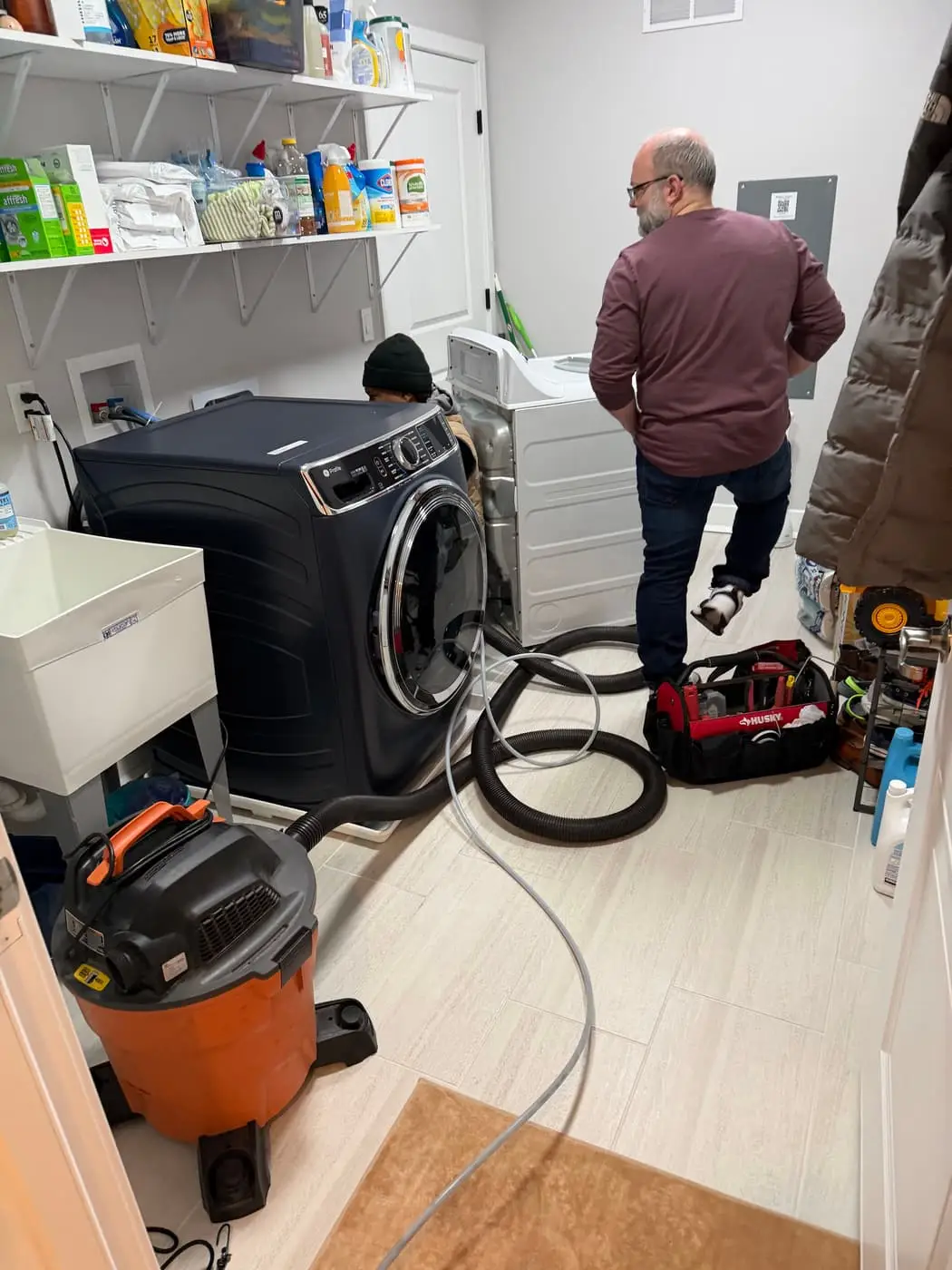
Long runs and basement laundries
The residential code limits a dryer exhaust duct to 35 feet, counting 5 feet off for every 90 degree turn, unless the dryer maker allows longer. Many older houses around Bloomfield have laundries in the basement, where the duct climbs to a rim joist or out through a window panel, and some runs are longer than they should be. Long runs, many bends and upward climbs collect lint faster, so they need cleaning more often.
- Every rise and elbow is a place for lint to settle
- Each 90 degree turn counts against the length limit
- Foil or plastic hose behind the dryer crushes easily
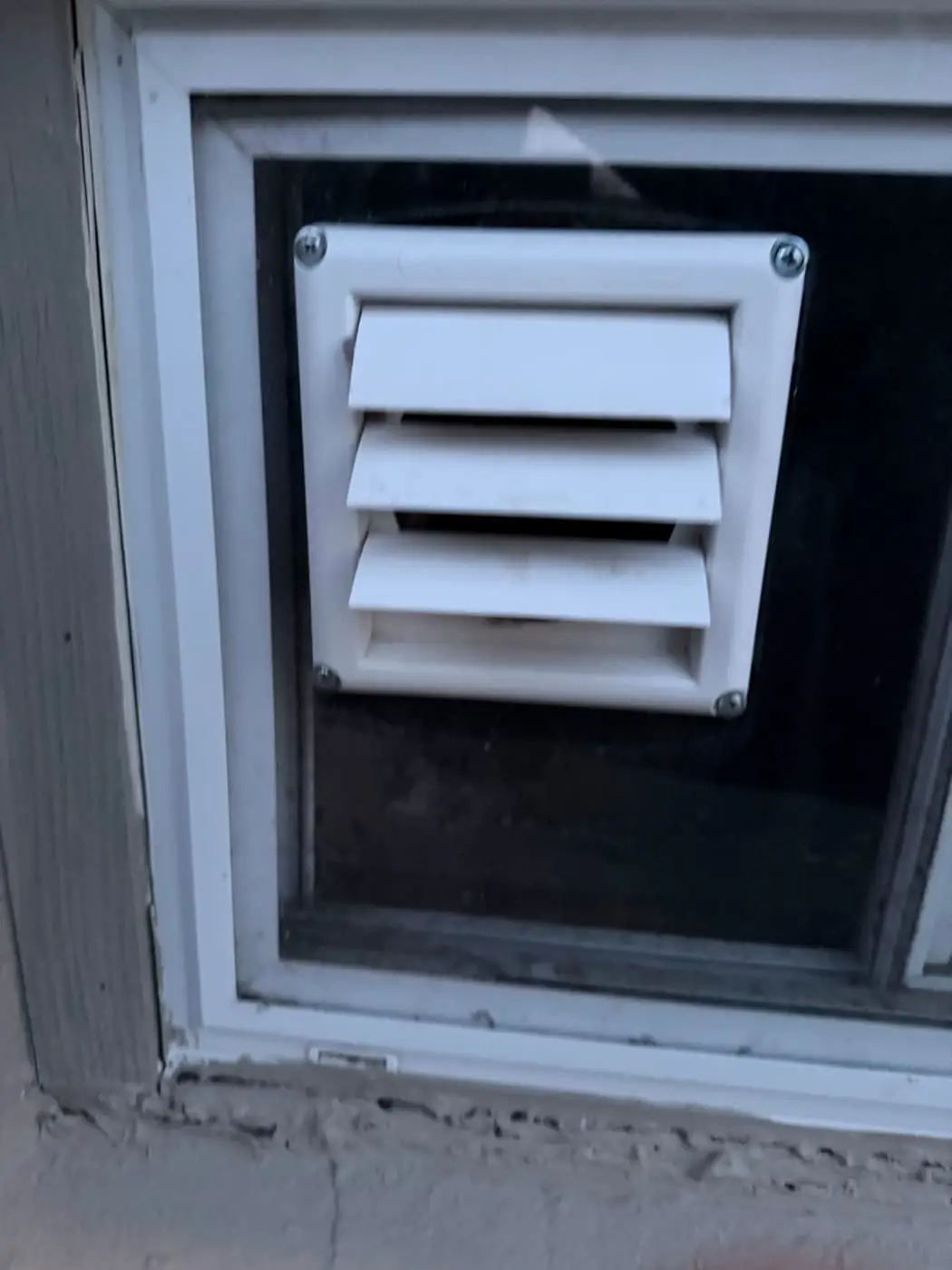
The hood on the outside wall
The outside hood is easy to forget. A flap stuck open lets in cold air and pests, and a flap stuck shut or packed with lint stops the air altogether. Some hoods carry a screen that catches lint and clogs, which is why the code does not allow screens on dryer exhaust terminations. We clean the hood, make sure the flap opens and closes on its own, and tell you if the hood should be replaced.
Reviews from our Google listing
A selection of our 5-star reviews on Google.
A hundred years of lime mortar requires a careful, low-RPM touch, and that antique sensibility was obvious in the preservation-grade sweeping of our 1910 hearth.
Soot was cleaned from the flue lining with non-abrasive polymer heads, leaving the critical structural integrity of the ceramic glaze undamaged.
Before any damage to the fundamental integrity of the ceiling, we were able to fix the outside chimney leaks after identifying significant water damage behind the lead counter-flashing.
Dryer vent questions
How often should a dryer vent be cleaned?
It depends on the length and shape of the run and how much laundry you do. A short straight run can go a long time between cleanings. A long run with bends in a busy household may need it every year.
Can you clean the dryer vent on the same visit as the chimney?
Yes, and many customers book both together. Tell us when you call and we will plan the time for both.
Our dryer is in the basement and the vent is long. Is that a problem?
Not by itself, but it needs more frequent cleaning. If the run is longer than the code allows, we will tell you and explain the options for shortening it.
Do you replace crushed dryer hoses?
Yes. A foil or plastic hose that is crushed behind the dryer restricts airflow, and we can replace it with a sturdier metal connector.