
Chimney repair in Bloomfield, NJ, from the crown down
Most chimney damage starts with water. It gets in through a cracked crown, a loose cap, tired flashing or open mortar joints, and the freeze and thaw of a New Jersey winter does the rest. We find where it gets in and fix that part.
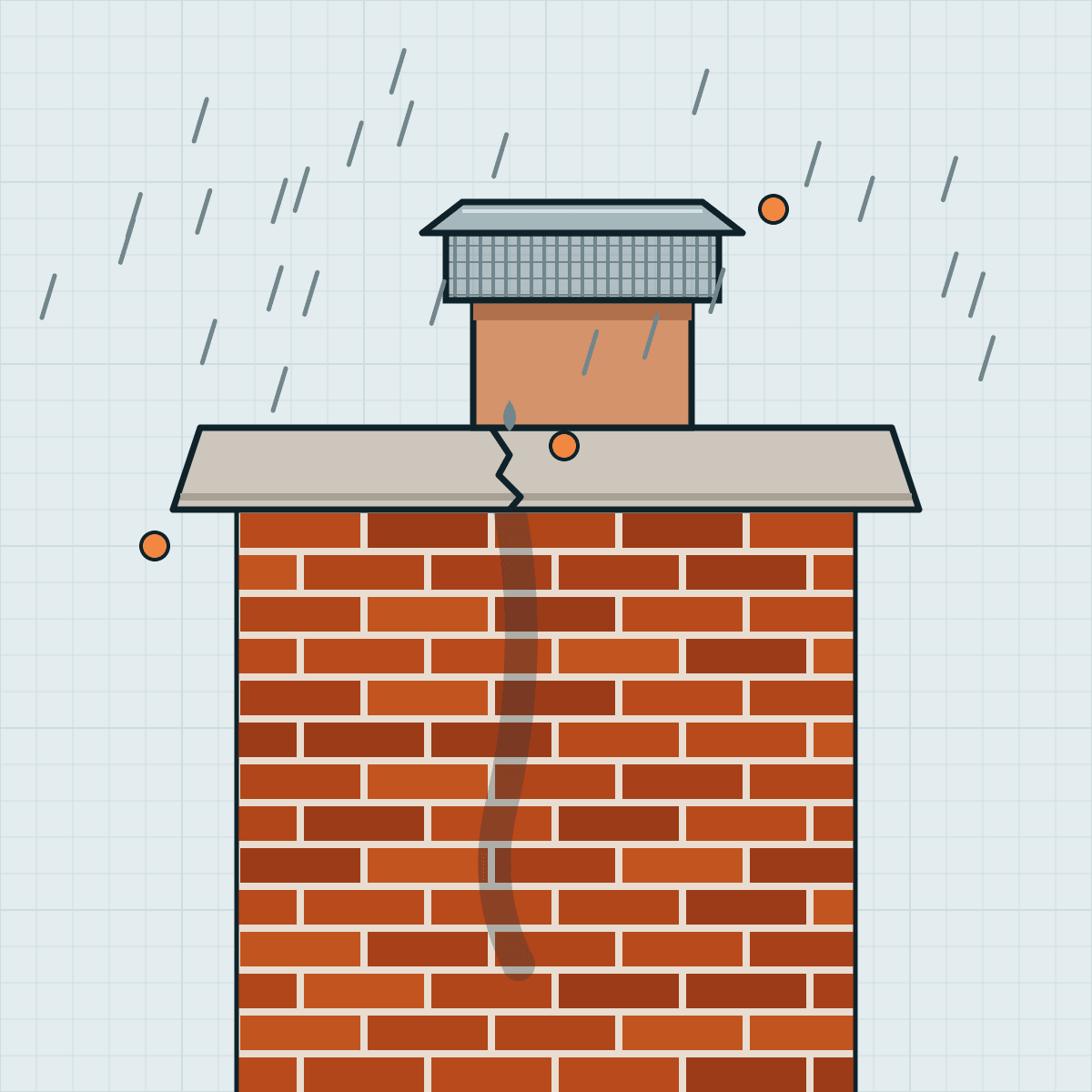
Where repairs start
A stain on the ceiling by the chimney, rust on the damper, white streaks on the brick or bits of mortar on the roof all point to water getting into the chimney. The repair depends on where it enters, so we look at the whole chimney before recommending anything.
The crown takes the weather first
The crown is the concrete slab across the top of the chimney. It should slope away from the flue and overhang the brick so rain drips clear of the wall. Many crowns were poured flat or too thin, and every winter water gets into small cracks, freezes and opens them further. Once water reaches the brick below, it spalls the faces and washes out the mortar. A crown that is cracked but sound can often be sealed, and one that is breaking up needs to be rebuilt.
- Hairline cracks that open a little more each winter
- Spalling, where the surface flakes off
- A flat crown with no slope or overhang
- A gap where the crown meets the flue tile
Fix where the water gets in, and most of the other damage stops growing.
Freeze and thaw, every winter
Northern New Jersey winters swing above and below freezing again and again. Each time water in a crack or a mortar joint freezes, it expands and pushes the gap a little wider, and each thaw lets more water in. That is why small chimney problems grow and why a crack ignored for one winter is usually bigger the next spring. Repairs done in dry weather, before the cold sets in, last longest.
What we repair
Every chimney is different, and the repair follows what the inspection found. Some need only a new cap. Others need the crown rebuilt, the flashing reset, the mortar replaced or the flue relined. We tell you which and why, and we do not sell a rebuild where a repair will do.
- Crown repair or rebuild with a proper slope and overhang
- Caps and chase covers replaced
- Flashing resealed or replaced at the roof line
- Repointing of failed mortar joints
- Liner repair or a new stainless steel liner
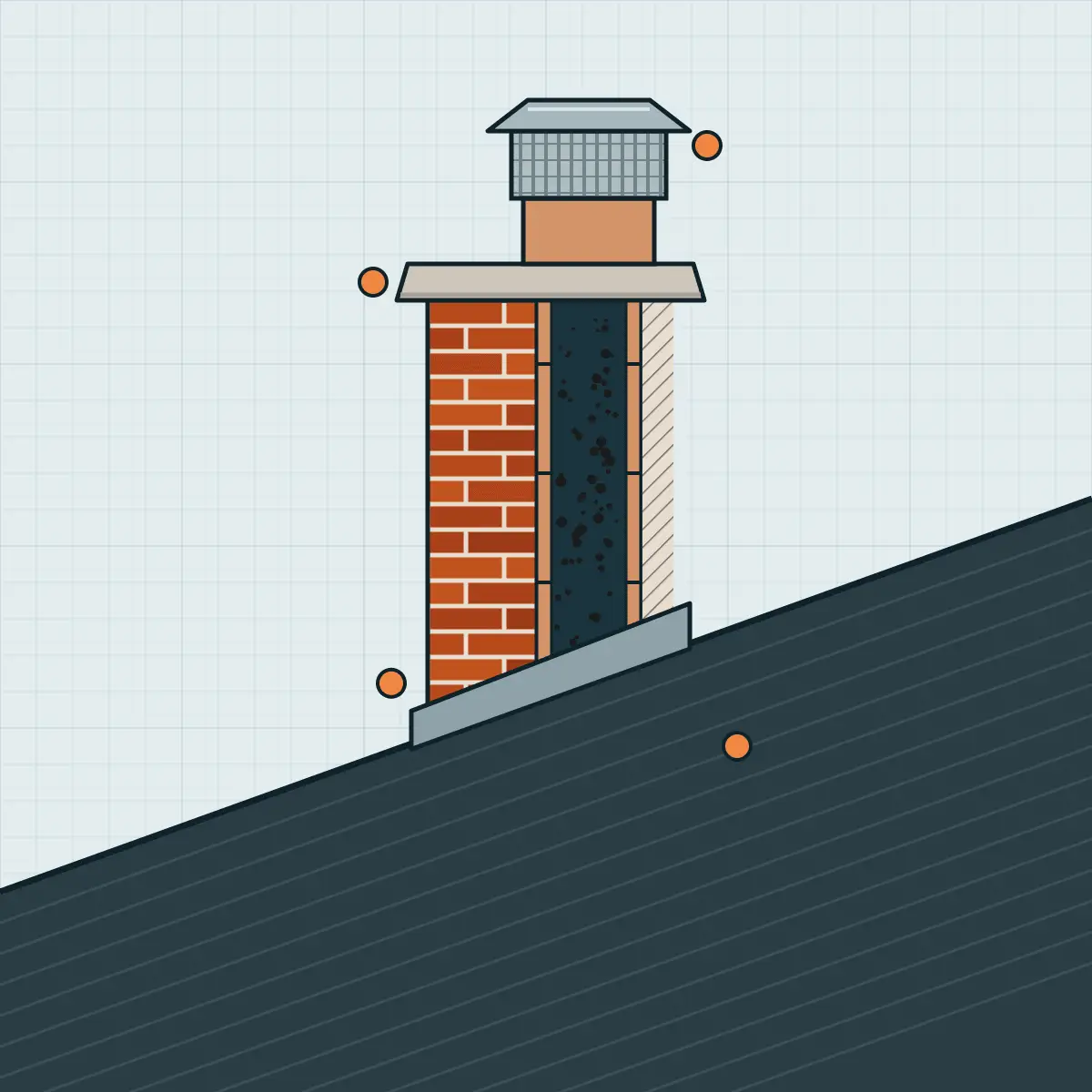
Signs to call before the next storm
A ceiling stain next to the chimney usually comes from the chimney itself, even when the roof gets the blame. Other signs are a musty smell from the fireplace, rust or water on the damper, white deposits on the brick, mortar or brick bits on the roof, and a cap that is loose or missing. Any of these is worth a look before the next heavy rain or hard freeze.
Reviews from our Google listing
A selection of our 5-star reviews on Google.
A hundred years of lime mortar requires a careful, low-RPM touch, and that antique sensibility was obvious in the preservation-grade sweeping of our 1910 hearth.
Soot was cleaned from the flue lining with non-abrasive polymer heads, leaving the critical structural integrity of the ceramic glaze undamaged.
Before any damage to the fundamental integrity of the ceiling, we were able to fix the outside chimney leaks after identifying significant water damage behind the lead counter-flashing.
Questions about chimney repair
Do I need a permit to repair my chimney?
It depends on the work and the town. Each New Jersey town enforces the construction code through its own office. Small repairs often need none, and larger ones such as a rebuild or a new liner may. We tell you before the job if a permit applies.
Is the leak from the crown, the cap or the flashing?
From inside they look the same. We check each one from the roof and with the camera, and we show you where the water is getting in before quoting a repair.
Can the crown be repaired, or does the chimney need rebuilding?
Usually the crown can be repaired or rebuilt on its own, without touching the rest of the stack. A rebuild of the upper chimney is only needed when the brick itself has failed.
What is the difference between repointing and a rebuild?
Repointing replaces the mortar between the bricks and leaves the brick in place. A rebuild takes the damaged brick down and lays it again.