
Chimney inspections in Bloomfield, NJ, Level 1 and Level 2
An inspection tells you whether your chimney is safe to use and what, if anything, needs work. You get the answer in person and in writing, with photographs.
Two levels, one purpose
A Level 1 inspection is the yearly check of a chimney whose use has not changed: the parts you can see and reach, from the firebox to the top. A Level 2 adds a video scan of the full flue and is the one NFPA 211 calls for when something changes, such as a sale, a new appliance, a fuel switch or a chimney fire.
Level 1, the yearly check
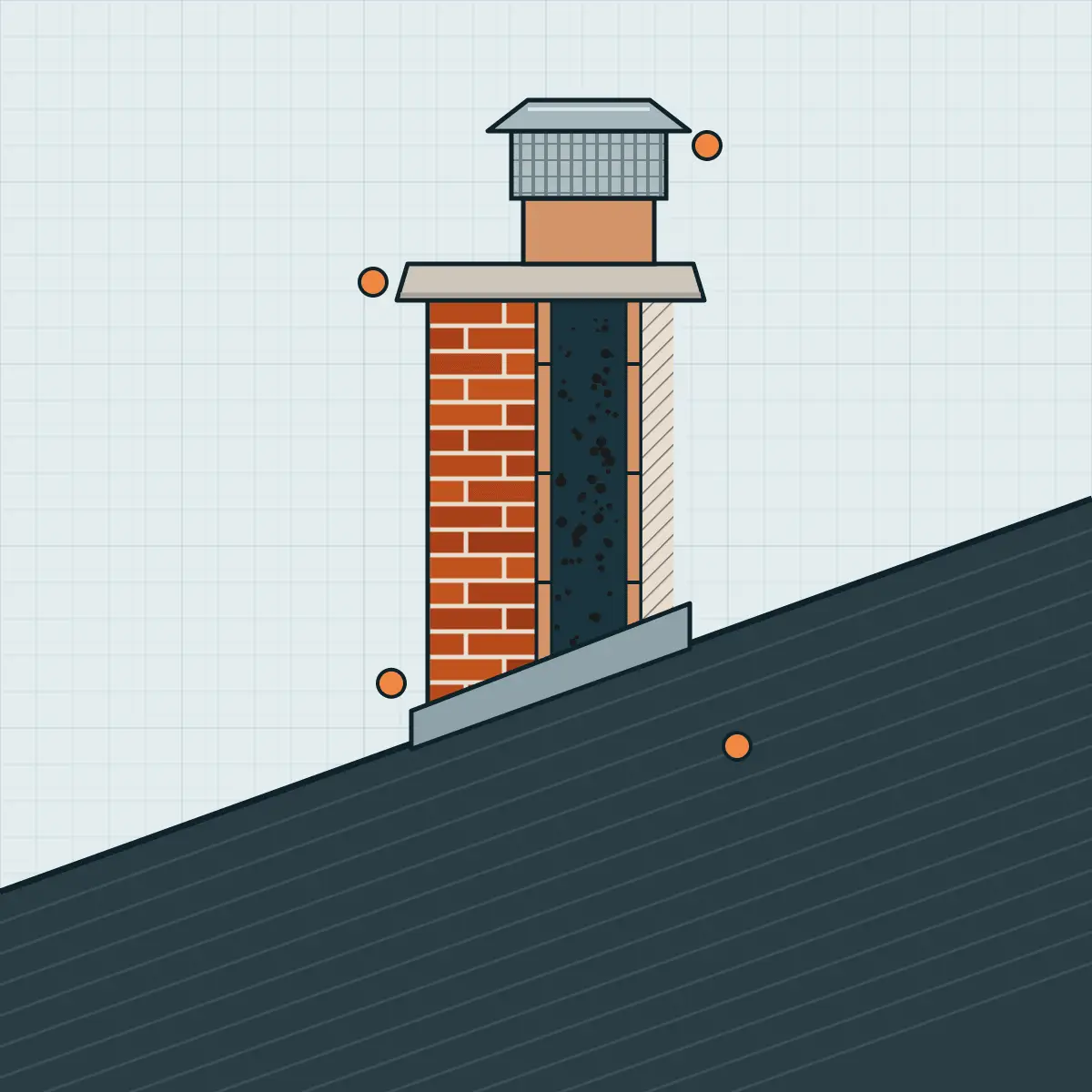
Most homes need a Level 1 once a year. We check the firebox, the damper and the smoke chamber, look at the flue as far as it can be seen from the bottom and the top, and look over the outside of the chimney from the crown down to the flashing. If the chimney is in regular use and nothing about it has changed, a Level 1 is usually enough. If we see something that needs a closer look, we tell you why before recommending a Level 2.
- Firebox, damper and smoke chamber
- Soot and creosote buildup
- The visible parts of the liner
- The crown, cap and flashing from the roof
A report you can hand to a buyer or an installer is worth more than a verbal all clear.
What a Level 2 adds
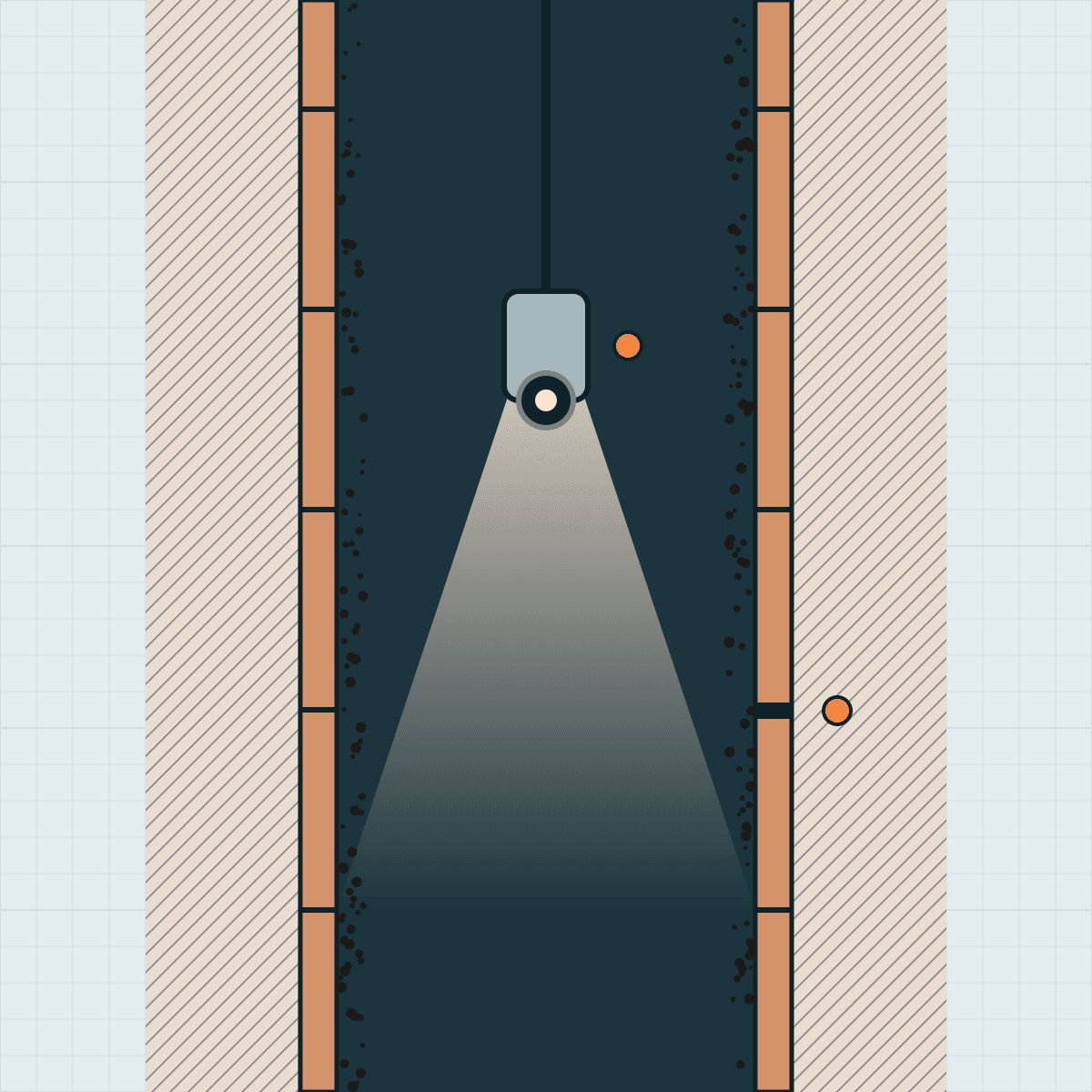
A Level 2 includes everything in a Level 1 plus a video scan of the whole flue, joint by joint, and a look at the parts of the chimney that pass through attics, crawlspaces and basements where they can be reached. It is the inspection that finds a cracked tile halfway up, a gap where the liner meets the smoke chamber, or a flue that no longer suits the appliance connected to it.
When a Level 2 is the right call
NFPA 211 calls for a Level 2 when the system changes, when the property is sold, and after a chimney fire or another event that may have damaged the chimney, such as a storm or an earthquake. In the older housing around Bloomfield, the most common reason is a change of appliance: a boiler or water heater replaced, or a switch from oil to gas.
- Buying or selling the house
- A new boiler, furnace, stove or water heater on the flue
- After a chimney fire, a lightning strike or storm damage
The rules behind the inspection
Since October 2025, New Jersey's code for one and two family houses has followed the 2024 International Residential Code, and that is the standard chimney and liner work is held to. When fuel-fired equipment is replaced, the town also expects a chimney verification form, UCC F370, signed by whoever checked the flue. Separately, every home sale in New Jersey needs a smoke and carbon monoxide alarm certificate from the local fire official. Our inspection report does not replace that certificate, but it covers the chimney the alarms are there to protect against.
Reviews from our Google listing
A selection of our 5-star reviews on Google.
A hundred years of lime mortar requires a careful, low-RPM touch, and that antique sensibility was obvious in the preservation-grade sweeping of our 1910 hearth.
Soot was cleaned from the flue lining with non-abrasive polymer heads, leaving the critical structural integrity of the ceramic glaze undamaged.
Before any damage to the fundamental integrity of the ceiling, we were able to fix the outside chimney leaks after identifying significant water damage behind the lead counter-flashing.
Questions about chimney inspection
What is the difference between Level 1 and Level 2?
A Level 1 covers the parts of the chimney you can see and reach. A Level 2 adds a video scan of the full flue and access to the chimney in attics, crawlspaces and basements, and is the one called for when something changes.
Do I need an inspection to sell my house?
New Jersey requires a smoke and carbon monoxide alarm certificate for a sale, issued by the local fire official. A chimney inspection is separate, and NFPA 211 recommends a Level 2 at the time of sale so the buyer knows what they are getting.
We are switching from oil to gas. Should the chimney be inspected first?
Yes. A flue sized for oil may be too large for a gas appliance, and the new installation comes with a chimney verification form. A Level 2 before the switch shows whether the flue needs a liner.
How often should a chimney be inspected if nothing changes?
Once a year, used or not, under NFPA 211. A chimney that sits unused can collect nests and debris, and water damage does not wait for the heating season.