The three stages of creosote, and which one you have
Most people think creosote is a quantity. It is really a state of matter, and the state you end up with is decided by how cold the smoke gets on the way out of your house.
The short answer
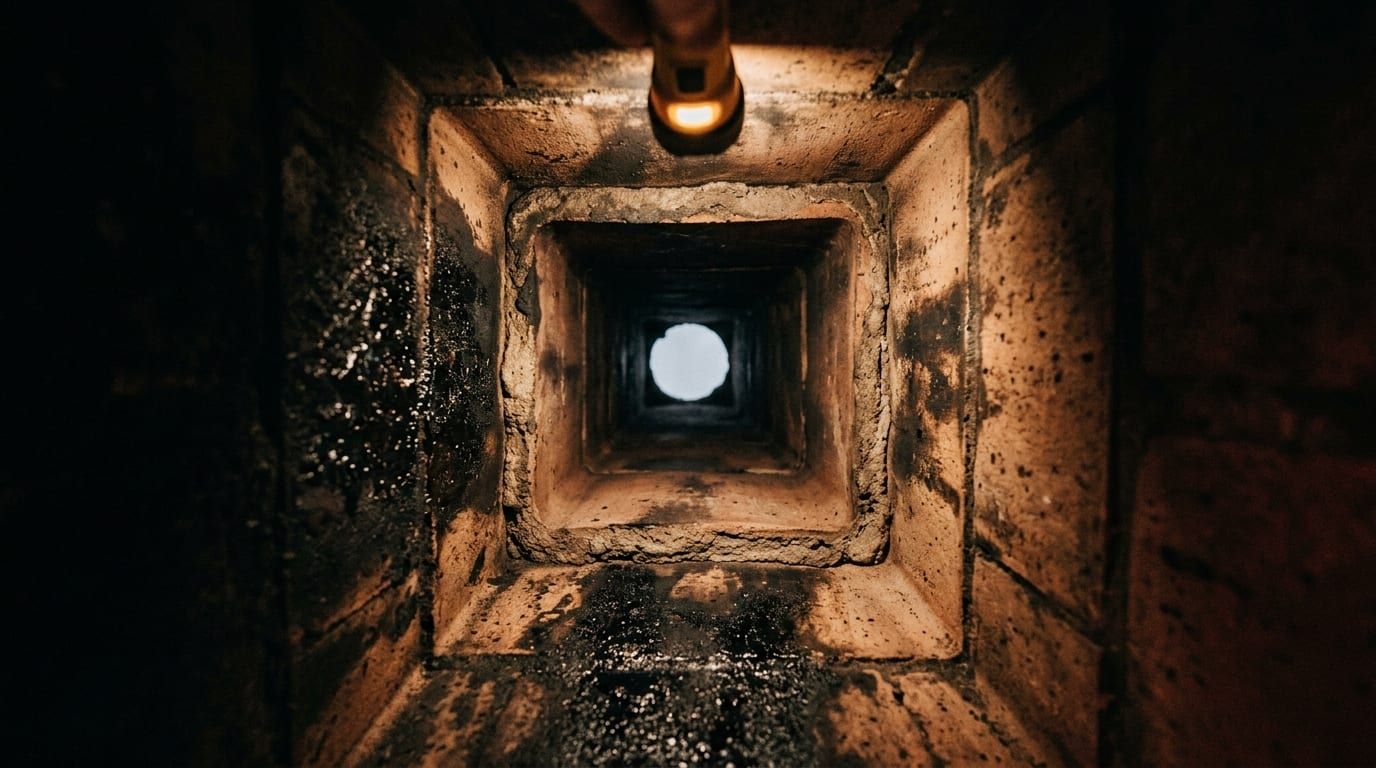
Creosote is what wood smoke leaves behind when it cools before it escapes the chimney, and it turns up in three distinct states. Stage one is dry and powdery, closer to soot than to tar, and a brush lifts it without difficulty. Stage two is hardened and shiny, like tar that has set, and it needs rotary tooling rather than a hand brush. The third has vitrified: a hard, glass-like skin fused into the tile itself, immune to any brush made, and the state that sustains a chimney fire. The factor that decides which of the three builds in your flue is not how many fires you light. It is how much heat the smoke loses on the way up — so an oversized flue, a stack running up an exposed exterior wall, wood that has not been dried, or a fire damped down to smoulder overnight will each drive you up the scale far faster than frequent burning ever will.
Stage one — the one everybody imagines
Dry, flaky, sooty, and mostly harmless in itself. It brushes off the liner readily and comes away in the vacuum without argument. A chimney that burns seasoned hardwood in short, hot fires and vents through a properly sized flue will typically produce stage one deposit and very little else, which is why an annual sweep on that kind of setup is a straightforward visit. It still needs doing — enough of it will restrict a flue and it is still combustible — but it is the version of the problem that the annual appointment is designed around. If your sweep comes away easily and the flue looks clean afterwards, this is what you had.
- Dry and powdery, closer to soot than tar
- Comes off cleanly with a brush
- What a well-run fire in a correctly sized flue produces
Stage two — hardened, and no longer a brush job
At this point the smoke is losing far more heat than it ought to on the way out. What it leaves is heavier, blacker and distinctly glossy — set tar, more or less — and a hand brush makes no impression on it. Clearing it means rotary tooling — a powered head with chains or stiff whips that works the deposit off mechanically — and it takes longer, which is why a sweep who finds stage two will usually say so rather than quietly spending twice the time. Finding it is also information about the rest of the setup: something is making the smoke lose too much heat, and unless that changes, the same deposit will be back sooner than the calendar suggests.
Stage three — glazed, and the one that burns
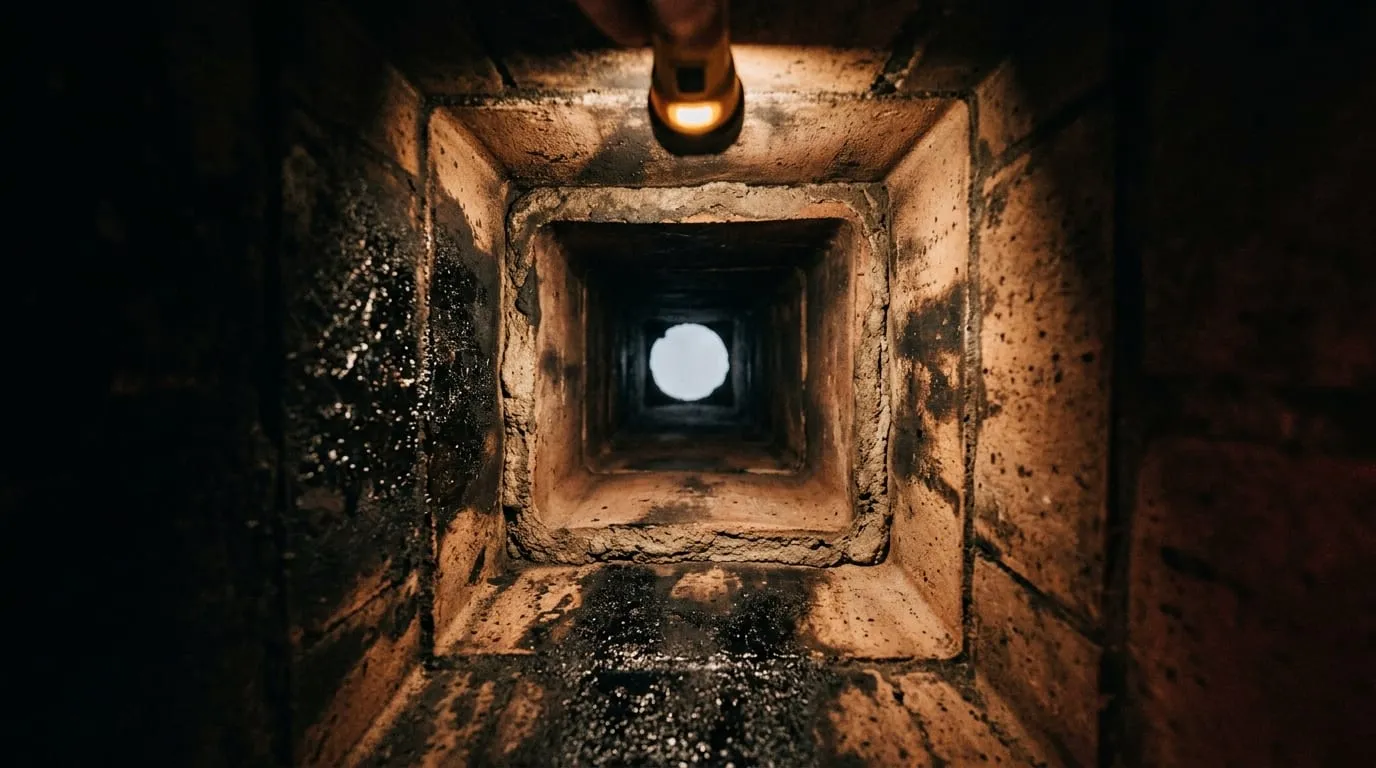
Glazed creosote is a hard, glassy, tar-like layer that has bonded to the liner itself. Brushing does nothing to it. Rotary work does very little. It is dealt with either chemically, with products applied over repeated burns to change its structure so it can be removed, or by relining, and neither is a same-day answer. It matters because this is the stage that sustains a chimney fire: it is concentrated fuel adhering to the inside of the shaft, and once it ignites it burns extremely hot and can crack tiles and open joints along the whole length of the flue. A chimney with stage three deposit should not be used until it has been dealt with, and that is one of the few genuinely urgent things anybody in this trade will ever tell you.
- Hard, glassy, and bonded to the liner rather than sitting on it
- Not removable by brushing or ordinary rotary work
- The stage that sustains a chimney fire, and a reason to stop using the flue
What actually drives the stages
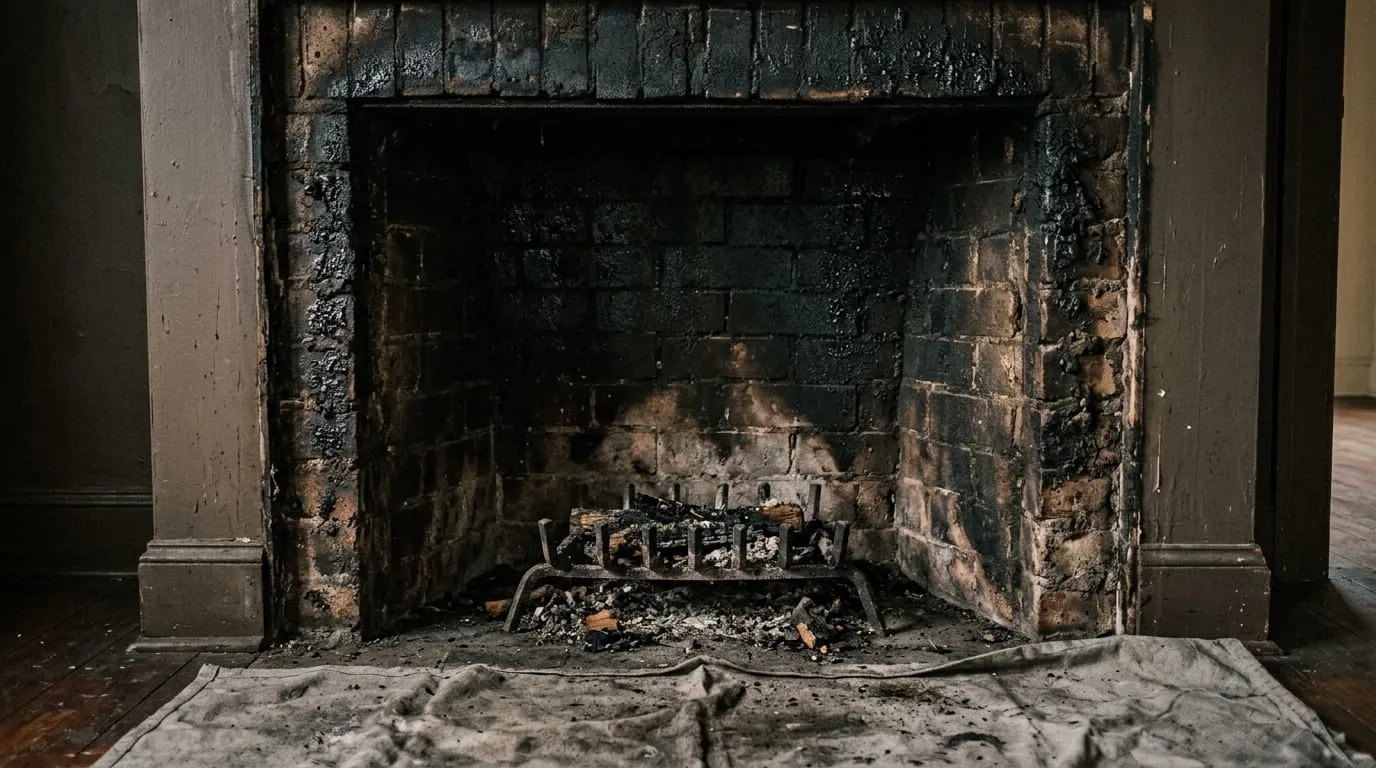
Heat loss, in four common forms. An oversized flue — the standard condition in pre-war Bloomfield housing after two fuel conversions — gives the smoke a large cold surface to lose heat to and not much velocity to escape with. An exterior chimney, especially one running up a north-facing wall, is a cold shaft for most of the winter regardless of size. Unseasoned wood carries water that has to be boiled off before anything else happens, so the fire runs cooler and the smoke leaves wetter. And a fire damped right down to hold overnight is, by design, a smouldering fire producing cool smoke for eight hours. Any one of those moves you up the scale; two together will do it quickly.
- A flue much larger than the appliance needs
- An exterior stack on a cold wall
- Wood that has not had a summer to dry
- Fires damped down to smoulder overnight
What to do differently this winter
Burn wood that has been split and stacked under cover for at least a full summer — the difference between that and green wood is larger than almost any other change available to you. Run shorter, hotter fires rather than long smouldering ones, and accept that a fire banked overnight is buying convenience with deposit. Let the flue warm up properly at the start of a fire rather than choking the air back as soon as it catches. And if the camera has already told you the flue is oversized for what vents into it, understand that the burning habits are working against a structural condition, and that relining changes the arithmetic in a way that nothing you do at the hearth can.
Questions people ask about this
How do I know which stage I have?
By looking, which in practice means a camera. Stage one and stage three look quite different on a screen and neither is reliably identifiable from the firebox with a torch. A sweep who has scanned the flue can tell you and show you at the same time.
Do chimney sweeping logs work?
They can help convert stage two deposit toward something more brushable, and they are not a substitute for sweeping. Nothing sold in a supermarket removes glazed creosote, and treating a log as a replacement for a visit is how a stage three flue goes unlooked-at for another year.
We burn gas. Does any of this apply?
No, and that is worth saying plainly. Gas does not produce creosote. A gas flue has a different failure mode entirely — it corrodes from acidic condensate — which is why the annual job on a gas appliance is an inspection rather than a sweep.
How fast can stage three build up?
Faster than most people expect when the conditions are wrong. A cold oversized flue burning unseasoned wood on overnight-damped fires can produce glazing within a single season. The same house burning dry wood hot may go years without leaving stage one.
Want somebody to look at yours?
Tell us what you are seeing and we will tell you which of these it is. We answer the phone from 7:00 AM to 9:00 PM, every day.
The services this is about
Chimney sweeping
Creosote never announces itself. It gathers in the dark, a fraction more with every fire, and for most households the first warning is a room filling with smoke on the coldest evening of the year.
Read moreChimney inspection
An inspection is not a formality before a sweep. It is the part of the visit that decides whether sweeping is even the right thing to do, and on an older Bloomfield stack the answer is often no.
Read more