
How often a chimney really needs sweeping
Every answer to this question that starts with a number is guessing. The interval is set by how the fire is run, and two houses on the same street can be three years apart.
The short answer
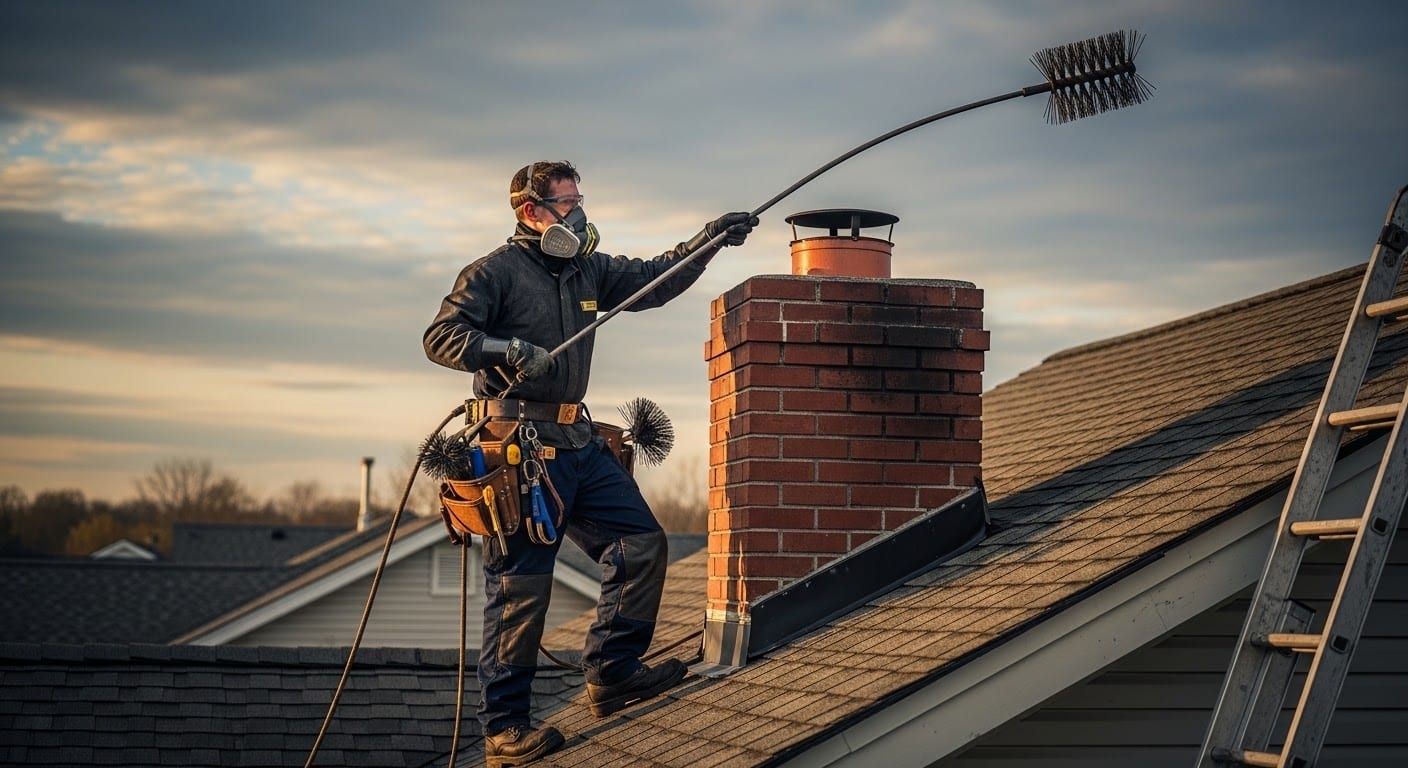
NFPA 211, the national standard, asks two things: look at the chimney annually, and clean it when what is inside justifies cleaning. That is deliberately not a schedule, because the correct schedule is a property of the individual chimney. For a wood-burning fireplace used through a full New Jersey winter, once a season is the usual answer. Burn wood that has not had a summer to dry, or damp fires down to hold overnight, and it comes round faster than that. Burn six fires a year in a well-sized flue and it may not. A gas appliance is a different case entirely: it produces no creosote, so what it needs annually is an inspection rather than a sweep — the flue still corrodes from acidic condensate, it simply does not fill up. The one part that is genuinely annual for everybody is somebody looking.
Why the interval is not a number
Creosote builds at a rate set by how much heat the smoke loses before it leaves the chimney, not by how many times you light a fire. A household burning seasoned hardwood in short hot fires through a correctly sized flue might produce a season's worth of light, brushable deposit. The same number of fires in an oversized coal-era flue on an exterior wall, burning wood cut last spring and shut down each night to smoulder, can produce hardened deposit in a few months. Both houses burned the same amount of wood. Any universal interval has to be wrong for one of them, and in practice the published intervals tend to be too long for the second household and unnecessary for the first.
- The rate is set by heat loss, not by the number of fires
- Flue size, wood dryness and burning habit each move it substantially
- A fixed interval is necessarily wrong for somebody
What the standard actually says
NFPA 211 is the national standard for chimneys, fireplaces, vents and solid-fuel appliances, and its requirement is often summarised incorrectly. It asks for chimneys, fireplaces and vents to be inspected at least annually, and to be cleaned, maintained and repaired as the inspection shows to be necessary. That is a two-part instruction and the first part is the one people drop. The annual event is somebody looking; the sweep is what follows when looking finds enough deposit to justify it. Read that way it stops being a rule you either comply with or ignore and becomes what it is meant to be — a way of finding out, every year, what your particular chimney has been doing.
Judging your own, roughly
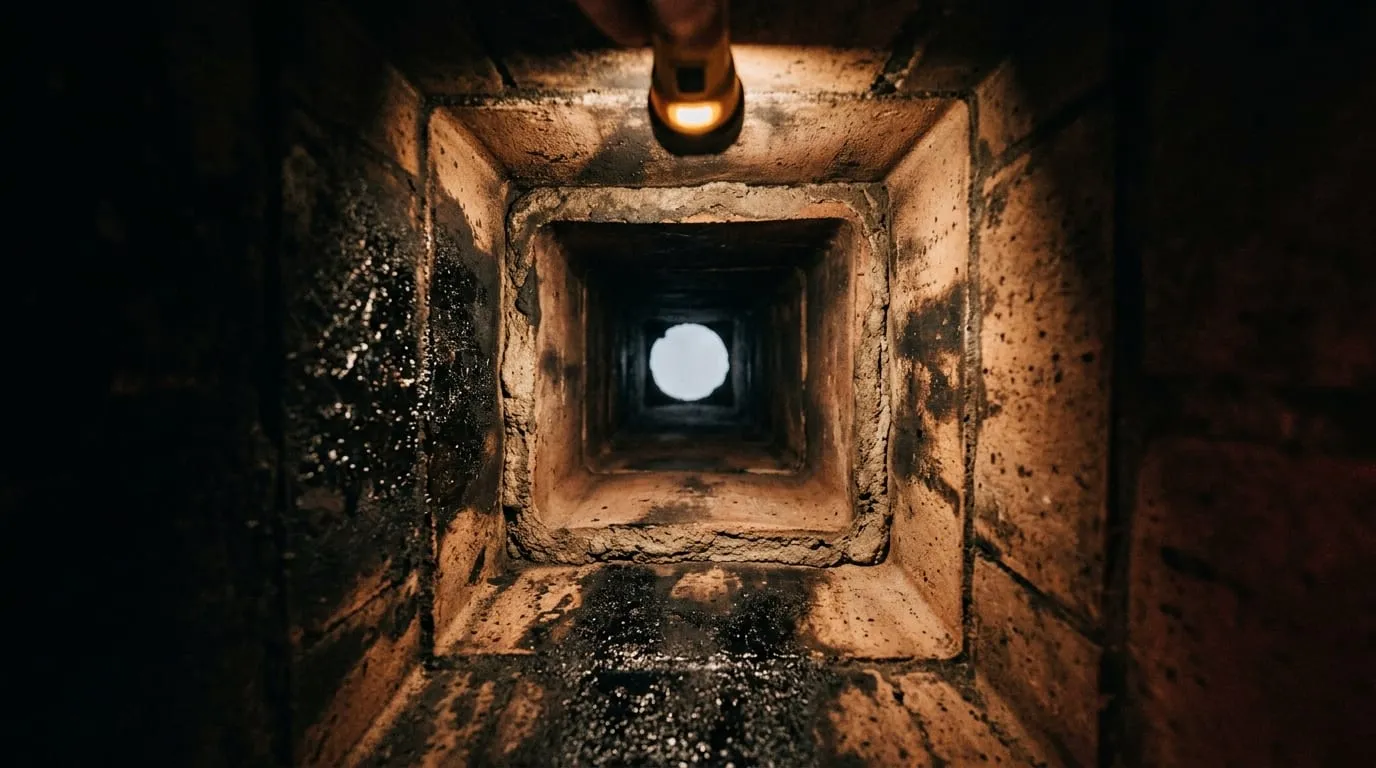
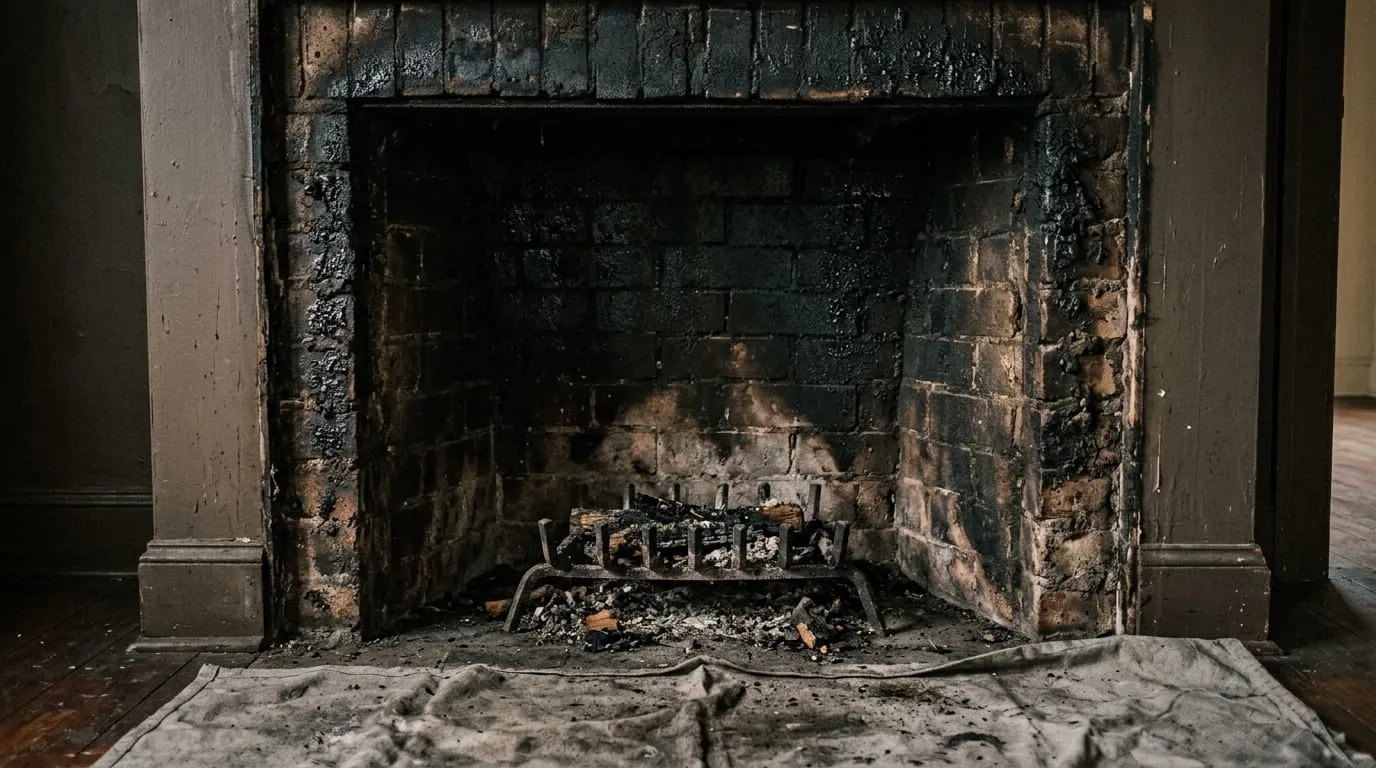
There is a rough test that will not replace a camera and will tell you whether to bring one forward. With the fire out and cold, open the damper and look up into the smoke chamber with a torch and a mirror, or scrape the inside of the flue where you can reach it with something rigid. Deposit that comes away as dry flakes is stage one and you have time. Deposit roughly the thickness of a coin, or that feels hard and shiny rather than powdery, is a reason to book. Anything glassy or tarry that will not scrape off is a reason to stop using the fireplace and get somebody out. And if you cannot see anything at all because of the geometry — which is normal — that is itself an argument for the annual look.
- Dry flakes that fall away — you have time
- Coin-thick, hard or shiny — book the visit
- Glassy and unscrapable — stop using it and call
The signs that override any interval
Some things mean now regardless of when the last sweep was. Smoke coming back into the room during a fire that used to draw properly is the clearest of them — something has changed in the shaft and burning through it is not the way to find out what. A sharp, insistent smell off an unlit hearth — worst in muggy weather — usually means heavy deposit plus a damper that no longer shuts. Falling debris in the firebox means either the liner or something living up there. And any chimney fire, including a brief roaring noise that stopped by itself, means nothing gets lit again until it has been scanned.
- Smoke returning into a room where it never used to
- A strong sharp smell from an unlit fireplace in warm weather
- Debris appearing in the firebox
- Any chimney fire, however brief it seemed
Gas, pellet and the appliances that are not fireplaces
A gas insert produces no creosote, so the annual job is an inspection: the flue still corrodes, because gas exhaust is cool and wet and the condensate is acidic, and in pre-war housing that flue is very often far larger than the appliance needs, which makes the condensation worse. A pellet stove is a different animal again — a mechanical feed, a combustion blower and a much narrower vent — and it generally wants servicing more often than a wood stove rather than less, because a narrow vent has less tolerance for anything accumulating in it. Wood stoves sit closest to the fireplace case, with one addition: a stove run cool to make the fuel last is a stove building deposit above it.
Questions people ask about this
We only light a fire at Christmas. Do we still need anything annually?
An inspection, yes, and often for reasons unconnected to burning. A flue that goes unused most of the year is the one that collects nesting material and leaves, and a chimney nobody burns is usually the one nobody has looked up in a decade.
Is once a year the right answer or not?
Once a year is the right answer for looking. Whether it is the right answer for sweeping depends on what the look finds, and for a good proportion of households it turns out to be roughly right by coincidence rather than by rule.
Does burning only hardwood mean I can go longer?
Dryness matters far more than species. Well-seasoned softwood burns cleaner than hardwood cut last spring. What you want is wood that has been split and stacked under cover through at least one full summer, whatever it is.
When in the year should it be done?
Late summer or early autumn, before the first cold evening. It is also the part of the year when anything the visit finds can still be repaired comfortably — masonry and crown work need dry days, and by December those are in short supply.
Want somebody to look at yours?
Tell us what you are seeing and we will tell you which of these it is. We answer the phone from 7:00 AM to 9:00 PM, every day.
The services this is about
Chimney sweeping
Creosote never announces itself. It gathers in the dark, a fraction more with every fire, and for most households the first warning is a room filling with smoke on the coldest evening of the year.
Read moreChimney inspection
An inspection is not a formality before a sweep. It is the part of the visit that decides whether sweeping is even the right thing to do, and on an older Bloomfield stack the answer is often no.
Read more