Which flue is yours in a two-family house
One chimney, several flues, and a century of appliances swapped in and out. In a divided house the first useful question is not whether the chimney is dirty. It is which part of it belongs to you.
The short answer
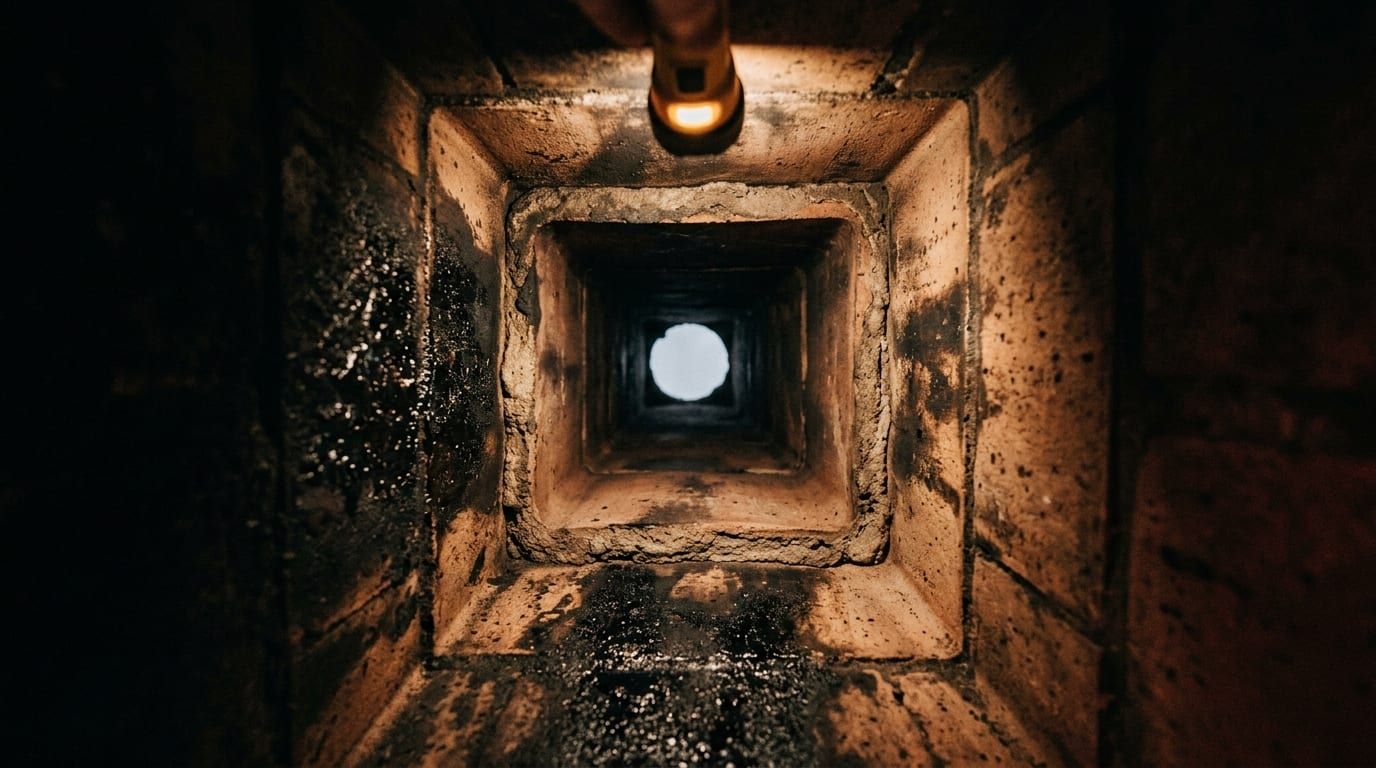
In a two- or three-family house the masonry stack you see above the roof is not one chimney. It is a bundle of separate flues built inside a single structure, and each one is supposed to serve exactly one appliance. Establishing which flue serves your unit is done with a camera, from both ends: the scan is run down each flue in turn from the crown while somebody watches at the appliance connection below, so every flue is identified by what it actually reaches rather than by what the previous owner said. This matters because the arrangement people inherit is wrong roughly as often as it is right, because a boiler and a fireplace sharing a flue is a genuine hazard, and because a failed separation between two flues can carry exhaust from one dwelling into another. In pre-war Bloomfield housing, where appliances have been added and removed for a hundred years, none of this is unusual.
Why one chimney contains several chimneys
A masonry stack on a divided house was built to carry more than one thing at once. Inside the brickwork there are separate vertical shafts, usually lined with clay tile, separated from each other by a thin masonry divider called a wythe. Each shaft is a flue, and each flue is meant to serve one appliance and nothing else. From the street you see one chimney; from the roof, looking down at the crown, you see two or three or four openings side by side. That arrangement is why the question "is my chimney clean" does not quite make sense in this kind of house. The answer depends entirely on which of those openings connects to the thing you are worried about, and that is not something anybody can tell from the living room.
- One stack, several separate flues, each meant for one appliance
- The dividers between them are thin and were built to be invisible
- From the crown you can count the openings; from the hearth you cannot
How the arrangement gets lost
Nobody sets out to lose track of it. It happens because appliances outlive the people who installed them. A house built around 1915 near Bloomfield Center had a coal furnace and open fireplaces. At some point the furnace became an oil burner, which needed a flue of its own and probably took over one that a fireplace had been using. Later the oil burner became a gas boiler, connected by whoever did the conversion to whatever was nearest. Somewhere in there a water heater arrived. Meanwhile the house was divided, or divided further, and the upstairs unit acquired its own appliance. Each of those changes was made by somebody who could see one connection and not the whole stack, and none of them left a drawing behind.
What goes wrong when it is guessed
Three things, in rough order of how often they turn up. The first is two appliances sharing one flue when they should not — commonly a gas boiler and an open fireplace, which is a poor combination because the fireplace can pull the boiler's exhaust back down when it is lit. The second is a flue that serves nothing at all, abandoned during a conversion and left open at the top, which fills with nesting material and rain and quietly saturates the masonry around it. The third, and the one that matters most in a divided house, is a failed wythe: where the separation between two flues has cracked or was never properly built, exhaust from the appliance in one dwelling can find its way into the flue serving another. That is not a theoretical problem and it is not visible from either hearth.
- A fireplace and a boiler on one flue, competing for the same shaft
- An abandoned flue left open at the crown, taking water for decades
- A failed separation carrying one unit's exhaust into another's flue
How it is actually established
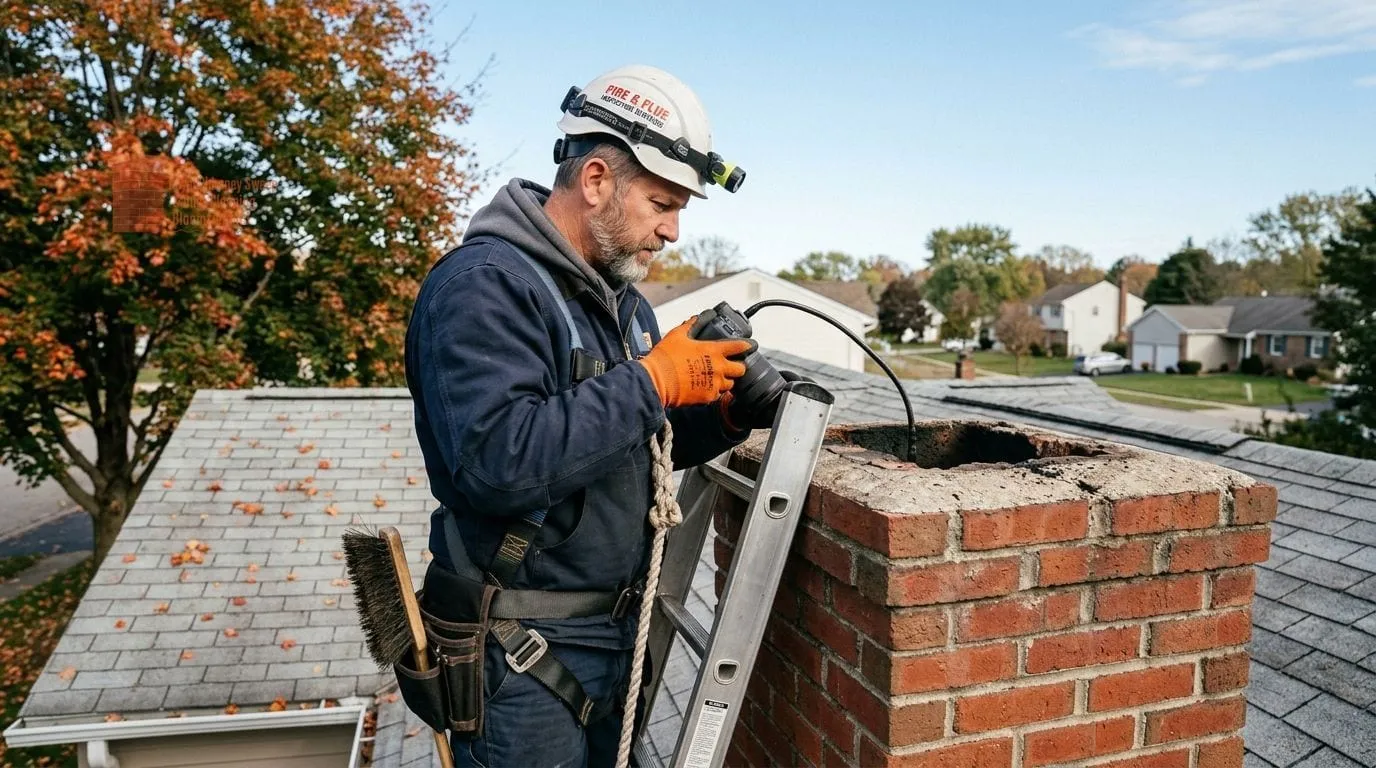
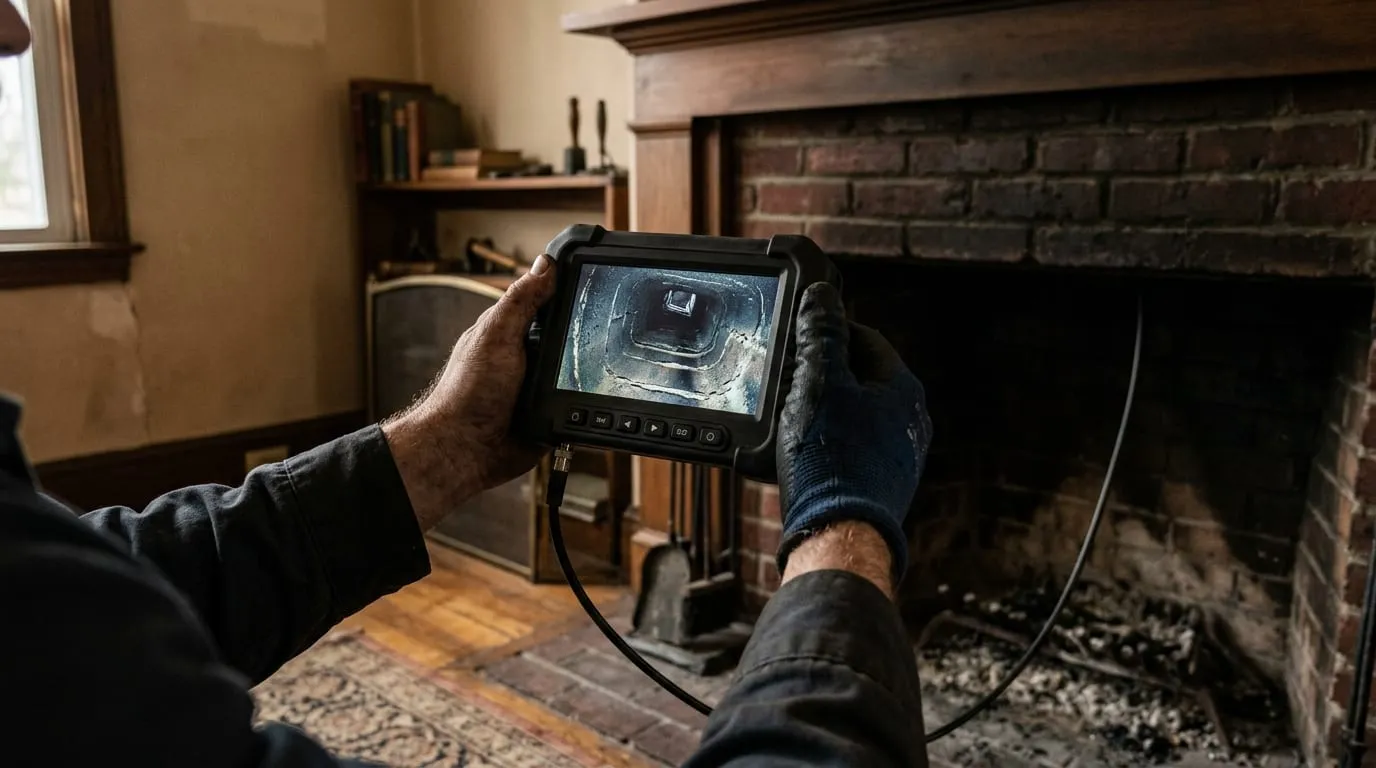
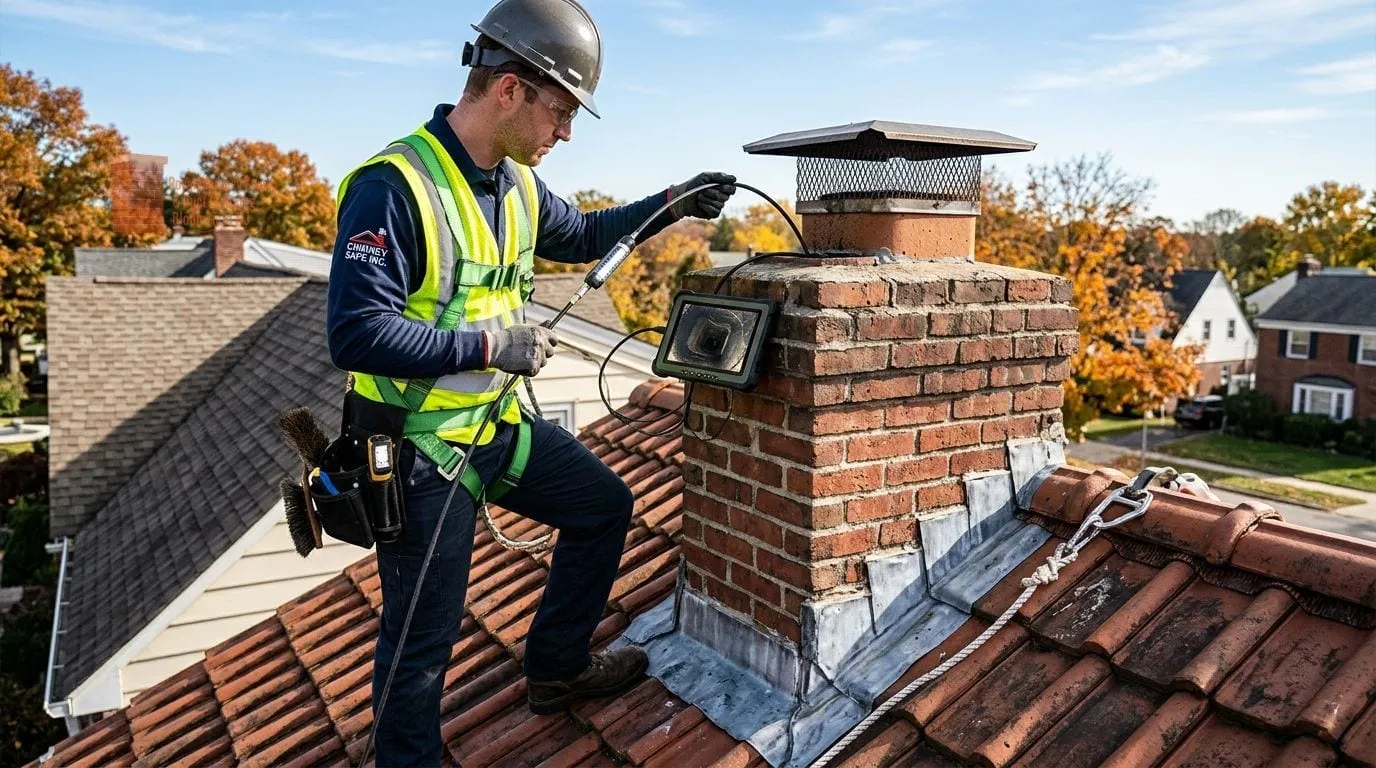
With a camera and two people, or a camera and two visits. Each flue is scanned from the crown downwards while the connection at the bottom is watched, so the flue is identified by what it physically reaches — the boiler breech, the upstairs fireplace, the water heater, or nothing. The scan also shows the condition of each wythe and whether any flue is carrying deposit from an appliance that no longer exists. Where the house is being bought or sold this is the Level 2 inspection, and it is worth asking for by name, because a Level 1 looks at what is reachable and reachable is exactly what does not answer this question. The output should be a written note saying which flue serves which appliance, with the photographs attached.
If you are buying one of these houses
Ask for a Level 2 before the inspection contingency runs out, and ask for the flue map in writing. It is a small thing to request and it changes what you know about the building substantially. A stack with four flues, two of them abandoned and one of them shared, is not a reason not to buy the house — it is extremely common in this housing stock — but it is a reason to know before you sign rather than after. It also tends to be the cheapest moment in the whole transaction to have the work done, because the alternative is discovering it on the first cold night, with tenants upstairs, in December.
Questions people ask about this
Can I tell which flue is mine without a camera?
Rarely, and a guess here is worse than no answer. Counting openings at the crown tells you how many flues exist but not what any of them connects to. The only reliable method is scanning each one and confirming what it reaches at the bottom.
Is a shared flue always dangerous?
Not always, but it depends entirely on what is sharing it. Two gas appliances of the right combined size on a correctly sized flue can be acceptable. An open fireplace sharing with a boiler is not, because the fireplace changes the pressure in the shaft every time it is lit.
What happens if a flue is abandoned?
If it was capped properly, nothing. If it was left open at the crown — which is the usual case — it takes rain and nesting material for as long as it is ignored, and the masonry around it stays wet. Capping an abandoned flue is a small job that prevents a slow one.
We are tenants. Can we ask for this?
You can certainly ask. A landlord has an interest in knowing the answer too, and the written flue map is exactly the kind of document that makes the question straightforward rather than adversarial.
Want somebody to look at yours?
Tell us what you are seeing and we will tell you which of these it is. We answer the phone from 7:00 AM to 9:00 PM, every day.
The services this is about
Chimney inspection
An inspection is not a formality before a sweep. It is the part of the visit that decides whether sweeping is even the right thing to do, and on an older Bloomfield stack the answer is often no.
Read moreChimney sweeping
Creosote never announces itself. It gathers in the dark, a fraction more with every fire, and for most households the first warning is a room filling with smoke on the coldest evening of the year.
Read more