
When duct cleaning earns its money, and when it does not
This is a service we provide, so treat what follows accordingly — and then note that most of it is about the circumstances in which you should not book it.
The short answer
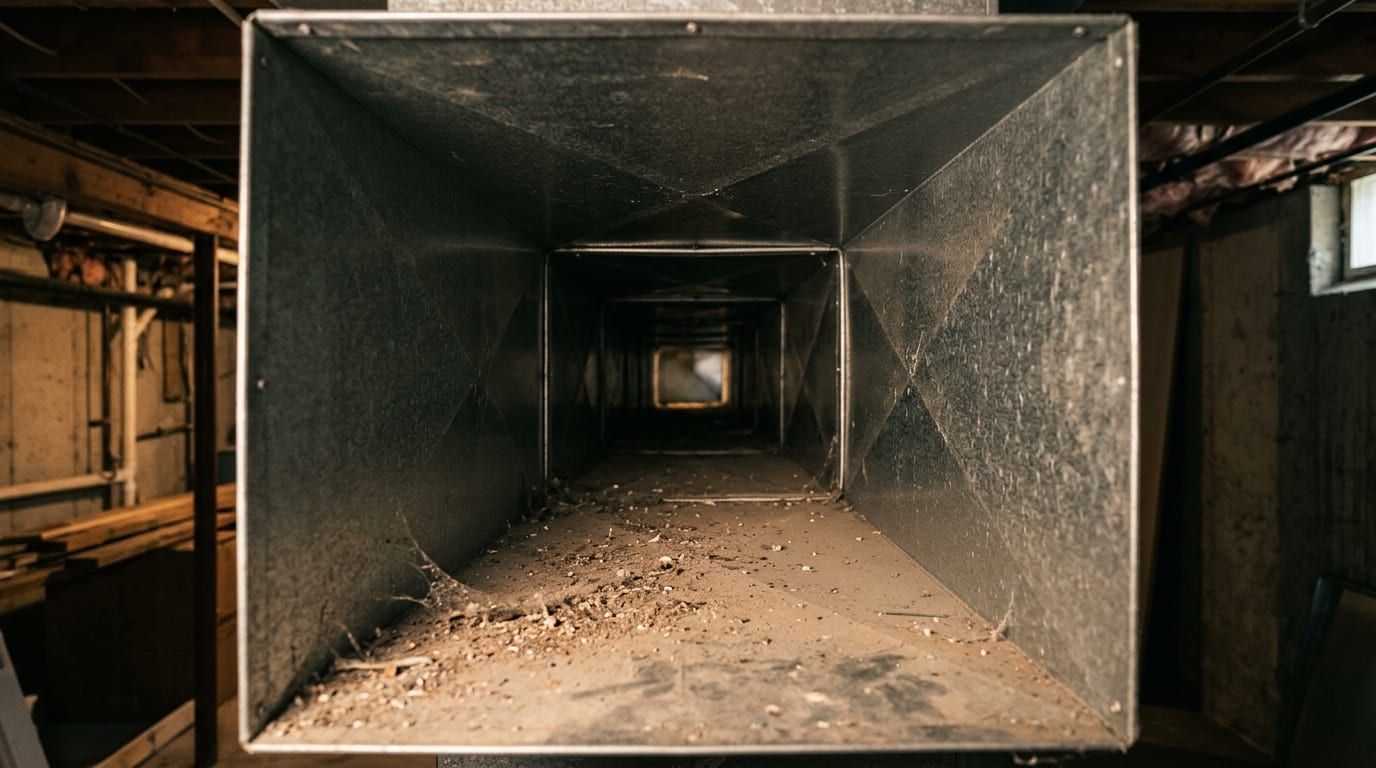
Air duct cleaning is worth doing in five reasonably specific situations, and is routinely sold to households in none of them. It earns its place after construction or a renovation the system ran through, because plaster and sawdust get into the ductwork and keep arriving through the registers for months. It earns it where rodents, insects or nesting material are found inside the ducts. It earns it after flooding or where a system has been sitting damp. It earns it when a house changes hands from somebody who smoked heavily indoors. And it earns it when debris is visibly coming out of a register. Outside those, no reputable body claims routine duct cleaning improves health outcomes in an ordinary house, and the money usually does more for you spent on a better filter, changed on schedule, or on sealing the duct leakage that is quietly costing you a good deal more than the dust is.
The five cases where it does something
Renovation is the commonest and the most clear-cut: a system that ran while a kitchen or a floor was being worked on has fine construction dust distributed through every branch, and it will keep coming back out of the registers long after the builders have gone. Rodents and nesting material inside ductwork is the second, and it is not rare where a duct passes through a crawlspace, a garage ceiling or an unconditioned attic. Water is the third — a flooded or persistently damp system needs the ducts addressed rather than merely dried out. Taking over a house from a heavy indoor smoker is the fourth, where residue genuinely coats every surface the air touches. The fifth is the simplest: visible debris arriving through a register, usually noticed on the first cold morning of the season.
- After construction or renovation the system ran through
- Rodents, insects or nesting material inside the ducts
- Flooding, or a system that has been sitting damp
- Taking over from a heavy indoor smoker
- Debris visibly coming out of a register
What the evidence actually supports
The position taken by the environmental and health bodies that have looked at this is consistent and it is not the one used in advertising: there is no good evidence that routine duct cleaning prevents health problems or that dust levels in an ordinary home rise measurably because of dirty ducts. Much of the particulate load in a house comes from occupants, cooking, pets and the outdoors rather than from the ductwork. What the same bodies do recommend is cleaning where there is substantial visible mould inside the system, where ducts are infested, or where ducts are clogged enough that debris is actually being released. That list is narrower than the marketing and it is the list we work from.
Done properly, and done to look busy
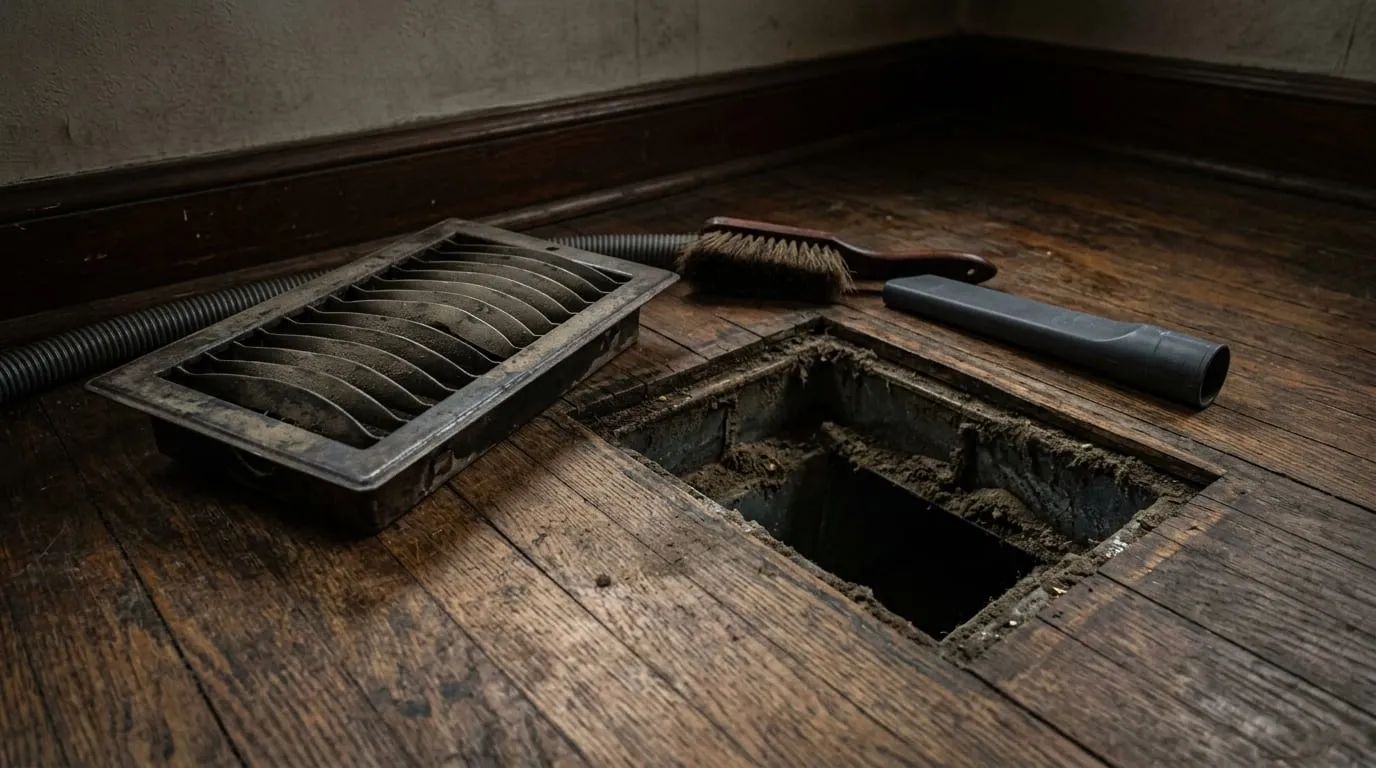
There is a real difference in method and it is worth knowing before anybody arrives. Done well, suction goes on at the trunk and every branch is worked into that draw, so anything that lifts leaves the building rather than resettling further along it. The return side gets equal time — it is the side pulling air out of the rooms and it carries the greater dust load. Registers and boots are lifted out and cleaned individually, because the boot below a floor register is where a decade of dust and small objects has collected. Done to look busy, a vacuum nozzle is pushed through each grille, the visit takes an hour, and the system is substantially unchanged afterwards.
- Negative pressure on the trunk, agitation in the branches
- The return side gets the same attention as the supply side
- Registers and boots lifted out, not vacuumed through the grille
The thing that usually matters more
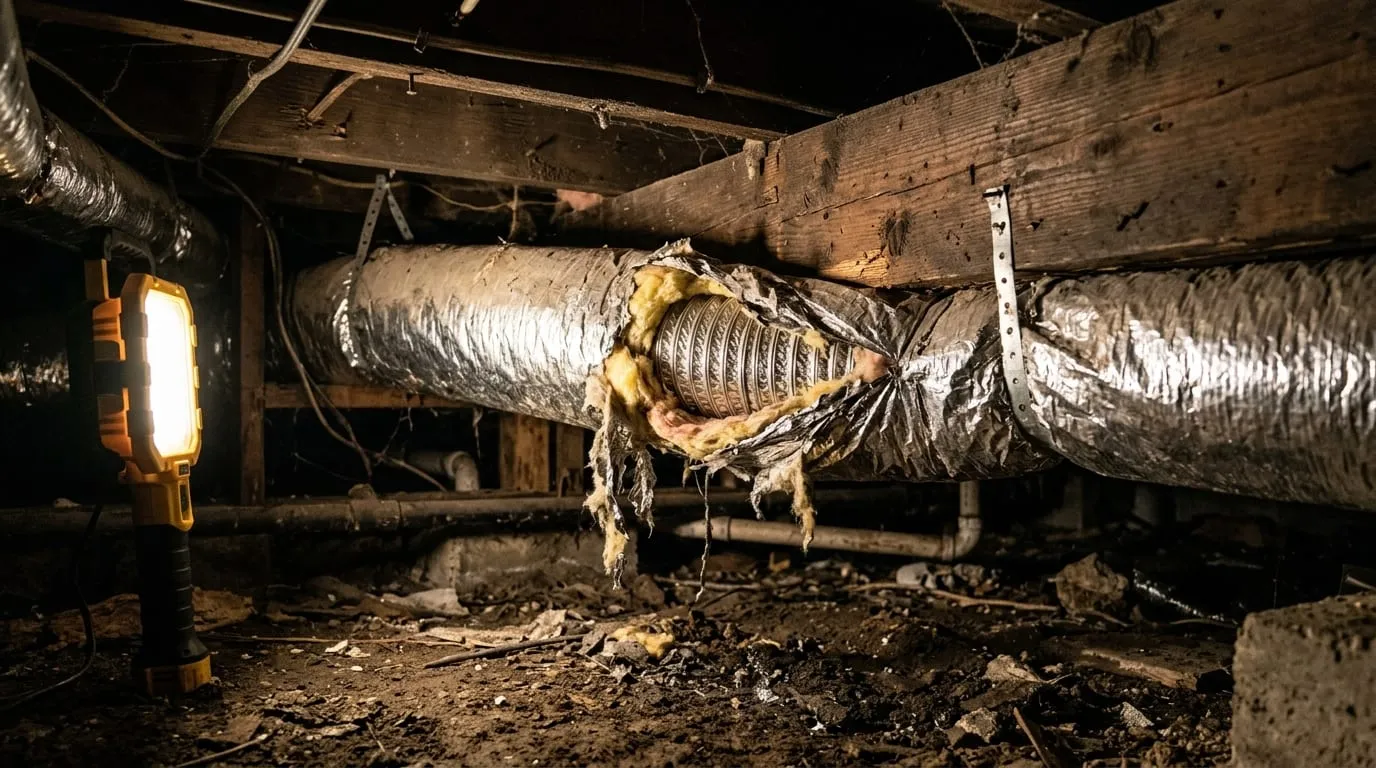
In older housing where forced air was retrofitted, the higher-value problem is almost always leakage rather than dust. Joints that were never sealed, or were sealed with cloth duct tape that has since dried out and let go, leak conditioned air continuously into crawlspaces and joist bays. The symptom is a heating bill rather than a visible mess, which is exactly why it goes unaddressed for years while the dust — visible, tangible, easy to sell against — gets the attention. If a system is both dusty and leaky, sealing first is the right order, because a system pulling air in through open joints undoes a good part of the cleaning it has just had.
How to get an honest answer about your own house
Ask whoever comes out to open the system and photograph the inside of the trunk and a couple of branches before quoting anything, and ask to see the photographs. That single request changes the conversation, because a clean duct photographs as a clean duct and there is nowhere for the recommendation to hide. If what comes back is a picture of somebody else's ductwork, or a generic image, that tells you what you need to know. We write "this does not need doing" often enough that it is worth saying explicitly here: it is a normal outcome of a survey, not a failure of one.
Questions people ask about this
Will duct cleaning help my allergies?
There is no good evidence it does in an ordinary house, and we would rather say that than sell against it. Where it demonstrably helps is the specific cases — construction dust, nesting material, water damage, heavy smoke residue. Otherwise a better filter changed on schedule does more.
How often should ducts be cleaned?
There is no useful interval, which is why we do not publish one. It is event-driven rather than calendar-driven: something happens — a renovation, an infestation, a flood — and then it is worth doing. A house where none of those has happened may never need it.
Someone knocked on the door offering whole-house duct cleaning cheaply.
Treat that with caution. A whole system done properly is most of a day's work, and a price that implies an hour implies a nozzle through the grilles. Ask what equipment they intend to use and whether the return side is included.
Should the dryer vent be done at the same time?
Usually yes, and if you only do one of the two, do that one. It is a different duct doing a different job, and unlike duct cleaning it has a straightforward safety argument behind it.
Want somebody to look at yours?
Tell us what you are seeing and we will tell you which of these it is. We answer the phone from 7:00 AM to 9:00 PM, every day.
The services this is about
Air duct cleaning
Ducts are worth cleaning in a handful of specific circumstances and are sold to everybody else. This page is about telling those two apart before you book anything.
Read moreDuct repair and replacement
One room that never gets warm is rarely a thermostat problem. It is usually a duct that has come off, been crushed, or been leaking into a crawlspace for years.
Read more